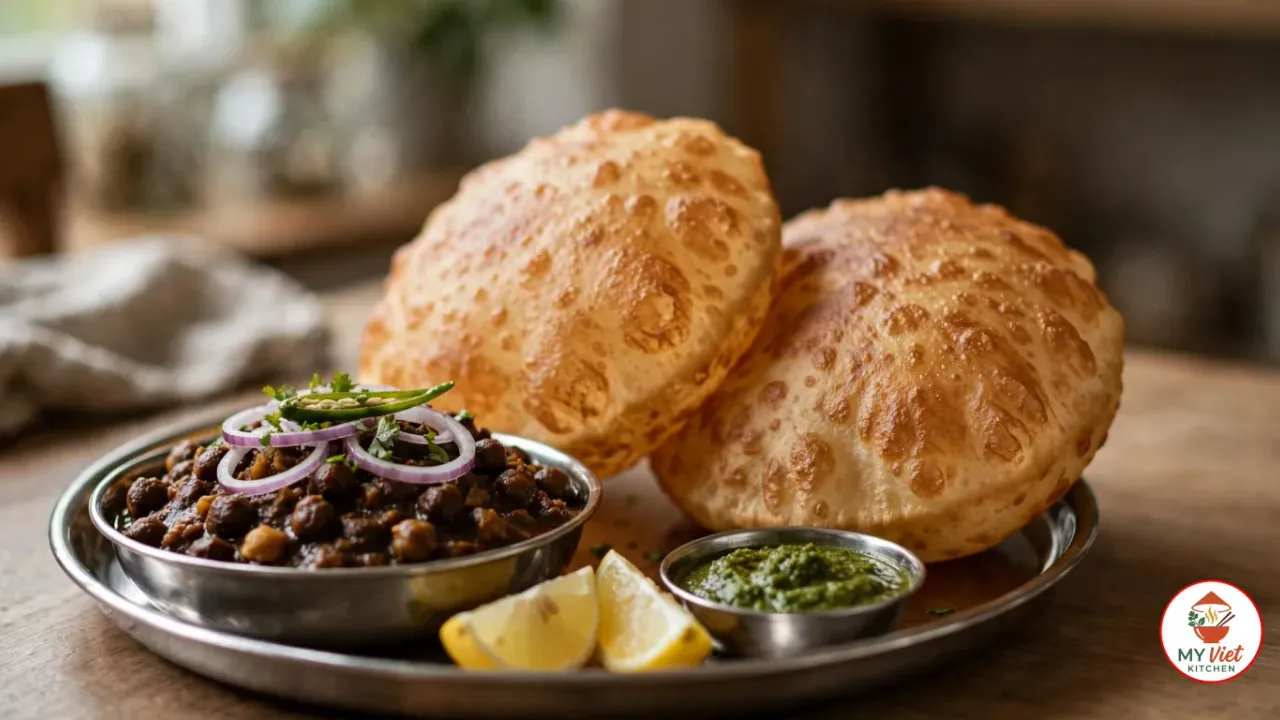
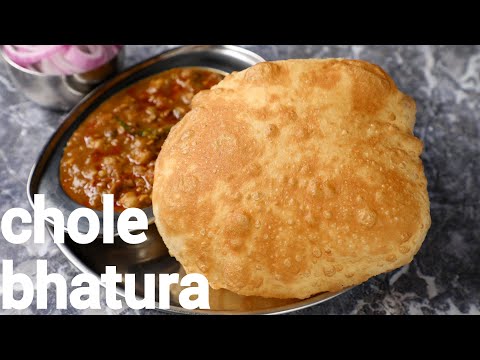
Chole bhature is a Punjabi plate of dark, sour chickpea curry (chole) and bhature, rounds of leavened dough that puff up like balloons in hot oil. By tradition it’s a breakfast dish (BBC News). Here the dried chickpeas soak overnight and cook with black tea for colour, and a yogurt dough rests for 2 hours while the curry simmers. Plan for nearly 11 hours in all, most of it hands-off.
Prep Time: 40 minutes | Cook Time: 1 hour 15 minutes | Total Time: 10 hours 45 minutes, including 8 hours of soaking and 2 hours of resting the dough | Servings: 4
Difficulty: Medium | Calories: ~840 per serving
Why Is the Chole So Dark?
Chickpeas boiled in plain water stay pale gold, but the chole sold with bhature in Delhi can be almost black. Food writer Kunal Vijayakar describes the chickpeas at Rawal Pindi Wale, a stall opposite Hans Raj College that has served chole bhature since 1954, as “dark, nearly black”. He gives two explanations: some cooks boil the chickpeas with amla (Indian gooseberry), and others with tea, which darkens them “without actually influencing the flavour” (Hindustan Times).
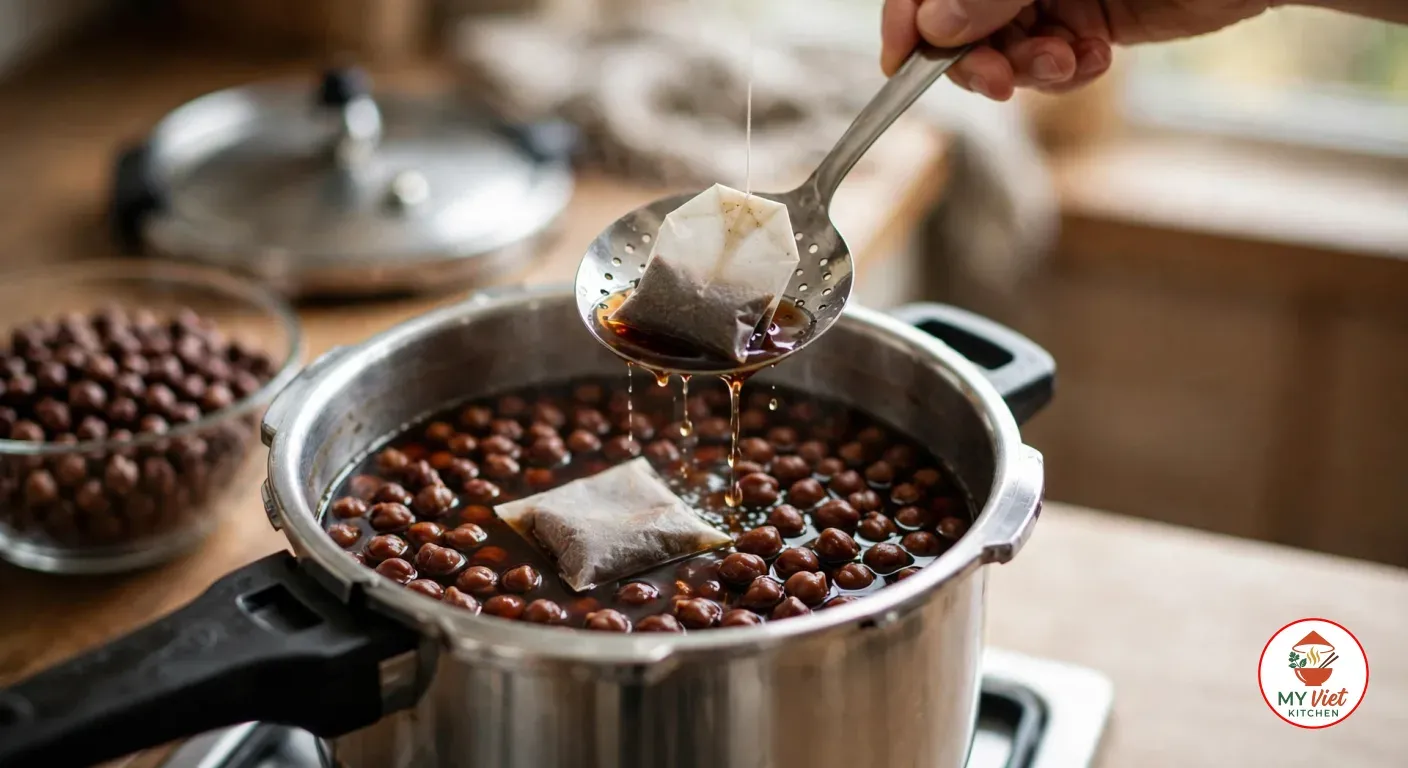
Tea is used here because it’s easy to find. Two black tea bags go into the pressure cooker with the soaked chickpeas and come out before the curry is built. The cooking liquid ends up the colour of strong tea and becomes the body of the gravy, so keep it. Onions cooked to a deep brown in step 2 add more colour.
The sourness matters as much as the colour. Amchur (dried mango powder) and anardana (ground dried pomegranate seed) give the chole a sharp edge that cuts through the fried bread. Check the label on your chole masala first. If it already lists dried mango and pomegranate seed, leave out the anardana, or add it at the end only if the curry tastes flat.
Why Does a Bhatura Puff Up?
A bhatura is a deep-fried flatbread made from maida (refined wheat flour), sometimes with semolina. Yogurt is the usual leavening, recipes add yeast or baking soda, and the dough is left to sour and ferment before frying. That leavening is what separates it from puri, which looks similar (Wikipedia).
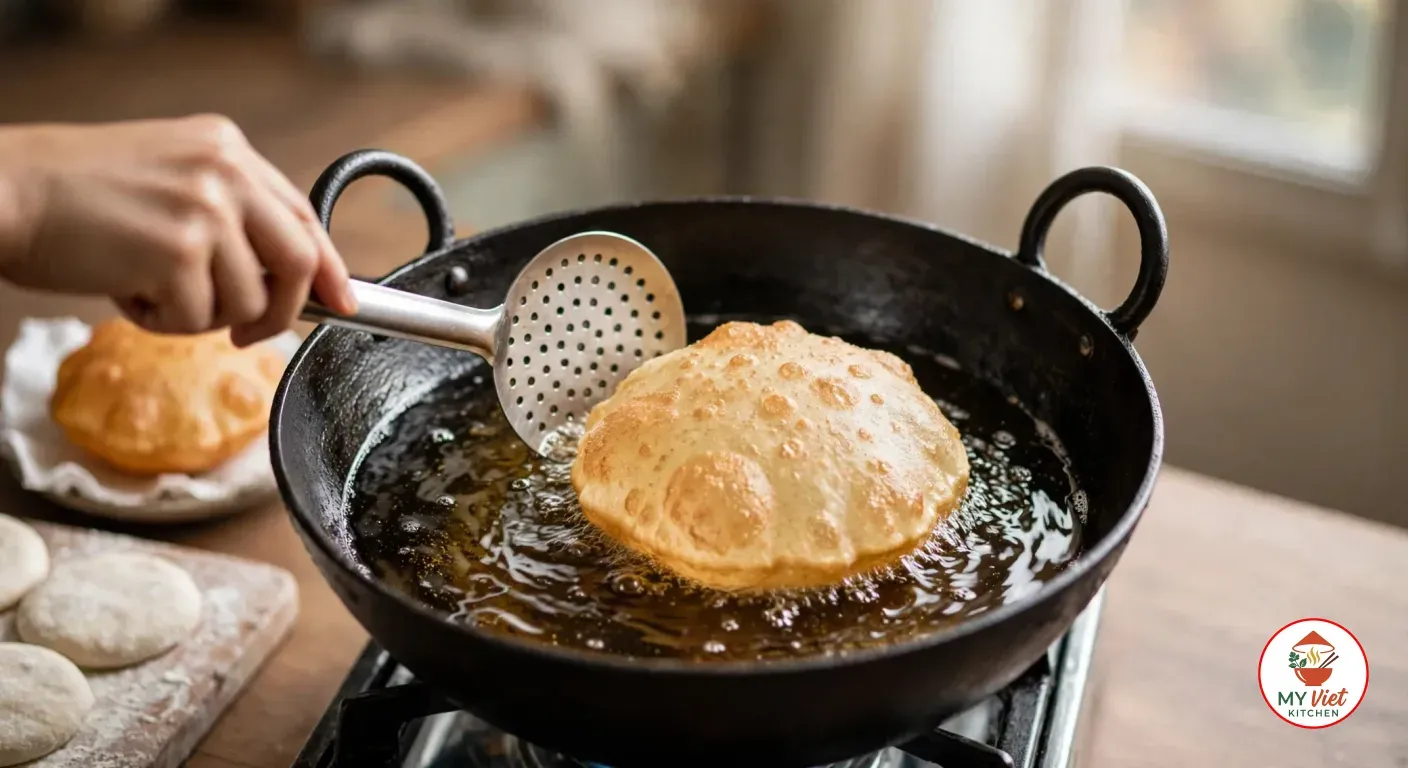
In hot oil, the gas trapped in the dough expands and the surface sets around it. Describing street cooks at work, the BBC’s Justin Rowlatt wrote that the bread “sizzles and froths angrily for a moment” before “the bhature inflates like a balloon” (BBC News).
At home, three things decide whether yours puff. First, the oil must be at 190°C (375°F); a pinch of dough dropped in should rise within 2 seconds. Second, the dough needs its full 2-hour rest, so the yogurt, baking powder and baking soda have time to make gas. Third, roll each round 3 to 4 mm thick and keep it whole, because a thin or torn spot lets the steam escape. If you roll with flour, shake off the excess: loose flour burns in the oil and darkens it after a few bhature.
Where Does Chole Bhature Come From?
Most accounts point to Punjab. A 2016 BBC piece says the dish comes from the north Indian state of Punjab, although Uttar Pradesh, Rajasthan and Himachal Pradesh have also laid claim to it (BBC News). Vijayakar traces it to undivided Punjab and calls pindi chole, named after Rawalpindi in present-day Pakistan, probably its precursor (Hindustan Times).
Its arrival in Delhi is usually linked to the Partition of 1947, and Outlook Traveller gives two competing stories. In one, Peshori Lal Lamba left Lahore, opened Kwality restaurant in Connaught Place and began pairing chole with bhature. In the other, Sita Ram and Diwan Chand started selling chole bhature from a bicycle in 1950. The business moved to Paharganj around 1980 and still trades there as Sita Ram Diwan Chand (Outlook Traveller).
How Should You Plan the Day?
From dry chickpeas to the table takes 10 hours 45 minutes, but less than 2 hours of that is hands-on. Soak the chickpeas the night before. On the day, make the bhature dough first and let it rest for 2 hours. Cook the chickpeas and the curry during that rest; together they take about an hour, and the chole can sit over the lowest heat until the bread is ready.
Heat the frying oil only once the dough has rested, and fry the bhature last, as people sit down. They deflate within a few minutes and turn chewy as they cool, so they can’t be made ahead. The chole can. It reheats well, so cook it the day before, keep it in the fridge and loosen it with a splash of water as it warms.
Ingredients for Chole Bhature
For the Chole:
- 1 1/2 cups (300 g) dried chickpeas
- 2 black tea bags
- 4 cups (1 liter) water, for cooking the chickpeas
- 1 teaspoon salt, for cooking the chickpeas
- 2 tablespoons vegetable oil or ghee
- 1 large onion (200 g), finely chopped
- 2 tablespoons ginger-garlic paste
- 2 medium tomatoes (250 g), pureed
- 1 tablespoon chole masala
- 1 teaspoon ground cumin
- 1 teaspoon ground coriander
- 1/2 teaspoon ground turmeric
- 1 teaspoon red chili powder
- 1 teaspoon amchur (dried mango powder)
- 1 teaspoon anardana powder (ground dried pomegranate seed), optional
- 1 teaspoon garam masala
- Salt to taste
- 2 tablespoons chopped fresh cilantro, plus more to garnish
For the Bhature:
- 2 cups (250 g) all-purpose flour (maida)
- 1/4 cup (40 g) fine semolina (sooji)
- 1/2 cup (120 g) plain yogurt, at room temperature
- 1 teaspoon sugar
- 1/2 teaspoon baking powder
- 1/4 teaspoon baking soda
- 1/2 teaspoon salt
- 2 tablespoons vegetable oil
- 1/4 to 1/3 cup (60 to 80 ml) warm water
- About 3 cups (750 ml) vegetable oil, for deep frying
To Serve:
- 1 small red onion, sliced into thin rings
- 2 green chilies, slit
- 1 lemon, cut into wedges
- Green chutney or mango pickle
Step-by-Step Instructions
Step 1: Soak and Cook the Chickpeas
1Soak the dried chickpeas in a big bowl of cold water, three times their volume or more, as they swell to more than twice their size. Leave them for 8 hours or overnight. On cooking day, start the bhature dough in step 4 first so it can rest while the chole cooks. Drain and rinse the chickpeas, then tip them into a pressure cooker with 4 cups (1 liter) of fresh water, the two tea bags and 1 teaspoon of salt. Cook on high pressure for 20 minutes, which is 4 or 5 whistles on most stovetop cookers, and let the pressure release on its own. A cooked chickpea crushes easily between your thumb and finger. Lift out the tea bags without tearing them and keep the dark cooking liquid.
Step 2: Make the Chole Masala Base
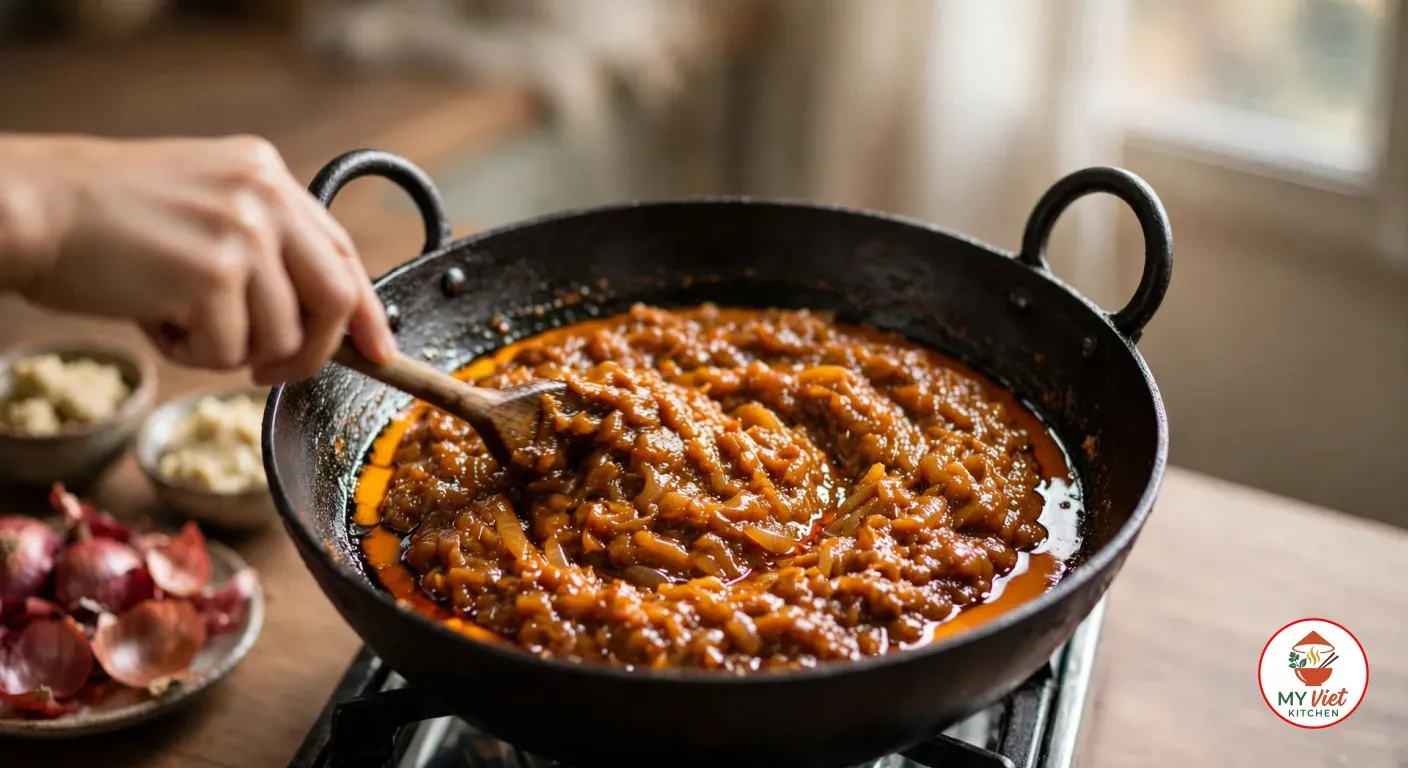
2Warm the oil or ghee in a heavy kadhai or wide pan over medium heat. Fry the chopped onion for 8 to 10 minutes, moving it around the pan often, until every piece is deep golden brown. Pale onions make a pale, sweet curry. Stir in the ginger-garlic paste and cook it for 1 minute, until it stops smelling sharp and raw. Then add the tomato puree and give it 6 to 8 minutes, scraping the pan base now and then, until the paste thickens and oil pools at the edges.
Step 3: Simmer the Chickpea Curry
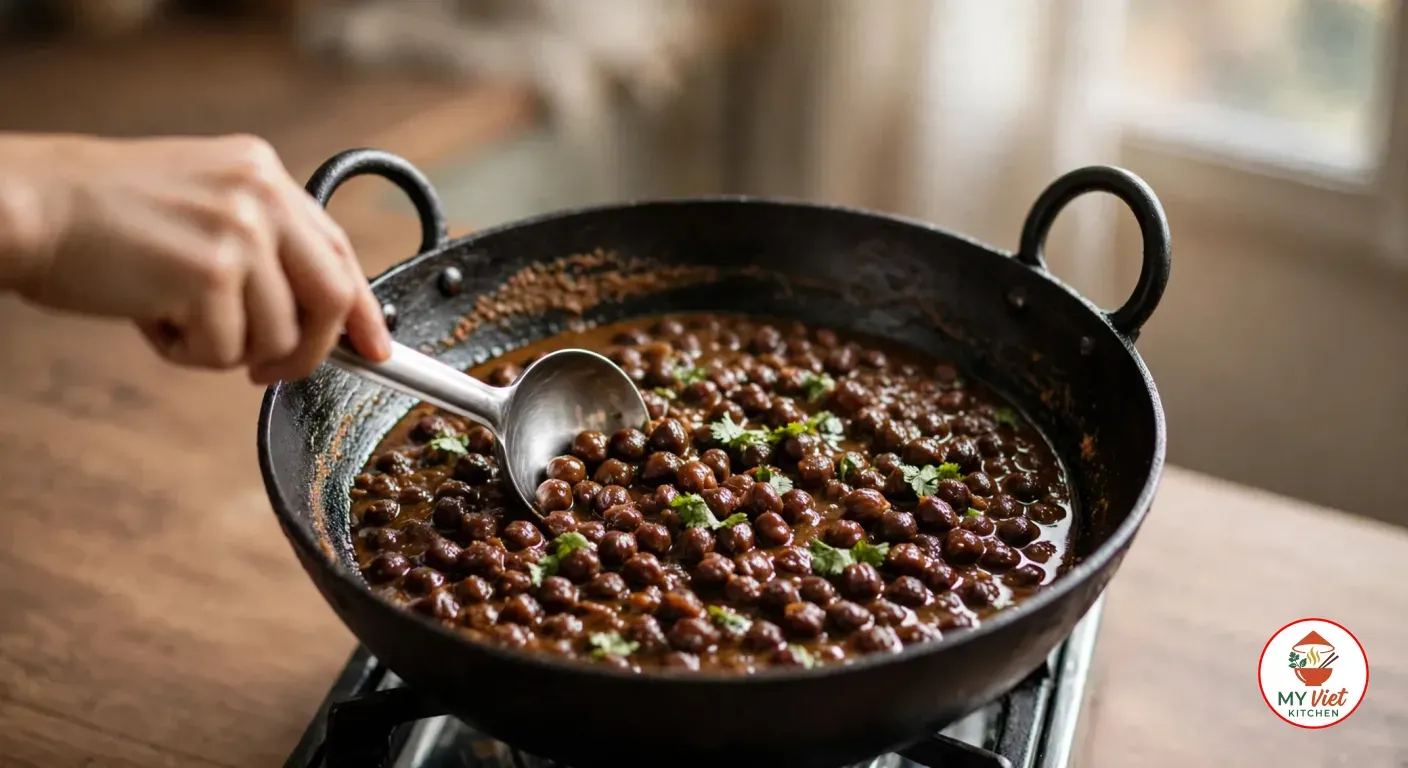
3Turn the heat to low and add the chole masala, cumin, coriander, turmeric, chili powder, amchur and anardana. Give them 30 seconds of stirring, no more, so they toast without burning. Tip in the chickpeas with 1 1/2 cups (360 ml) of their dark cooking liquid and let the curry bubble gently, uncovered, for 15 to 20 minutes. While it bubbles, crush a few spoonfuls of chickpeas against the wall of the pan with a ladle. The released starch thickens the gravy until it coats a spoon. If it gets too thick, loosen it with more of the cooking liquid. Season with salt, stir in the garam masala and cilantro, and keep the chole warm over the lowest heat.
Step 4: Prepare the Bhature Dough
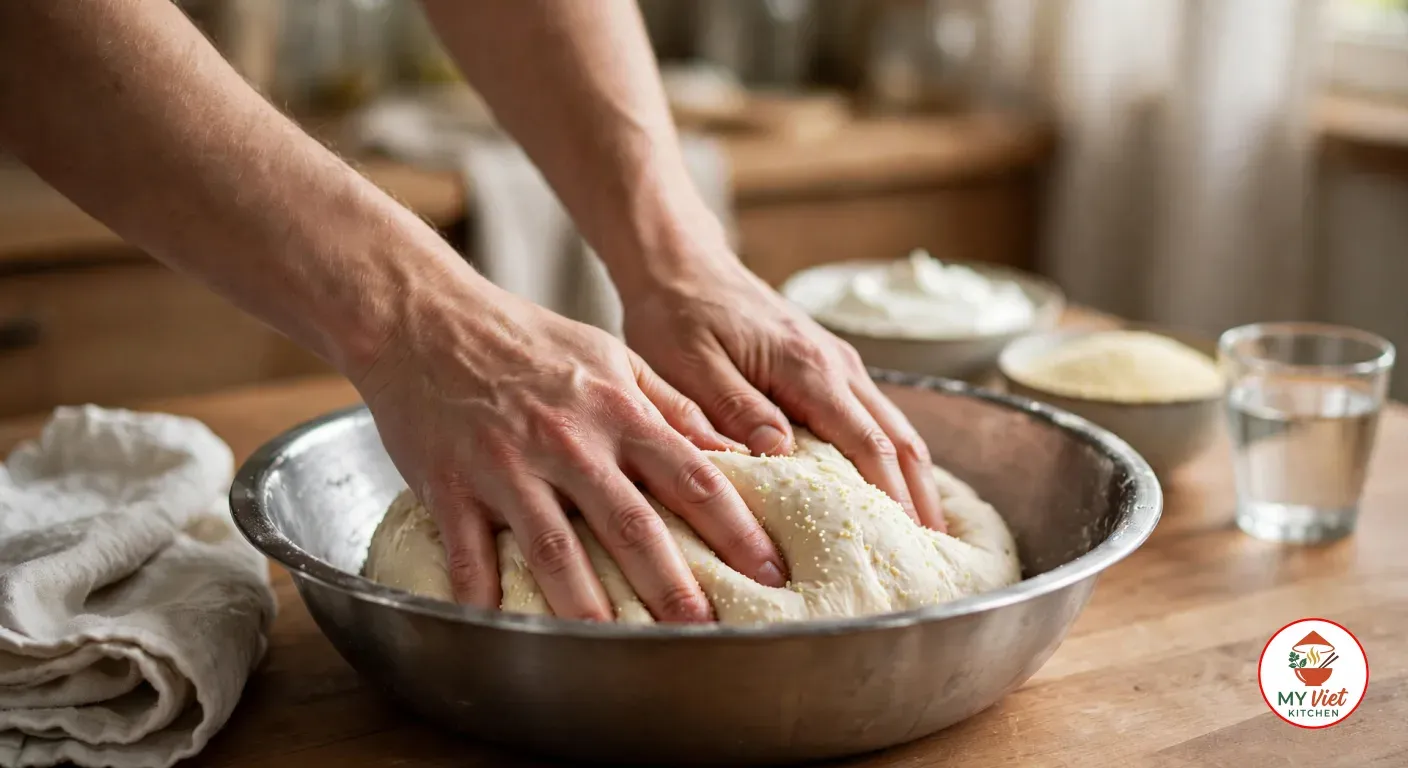
4In a large bowl, mix the flour, semolina, sugar, baking powder, baking soda and salt. Add the yogurt and oil and rub them in with your fingertips until the mix looks like coarse crumbs. Add the warm water a tablespoon or two at a time, kneading as you go, then knead for 8 to 10 minutes into a soft, smooth dough that is slightly tacky but doesn’t cling to your hands. Coat the dough with a few drops of oil, lay a damp cloth over the bowl and let it rest at warm room temperature for 2 hours, or up to 4. It looks slightly puffy when it’s ready.
Step 5: Fry the Bhature Until Puffy and Golden
5Pour the frying oil into a deep kadhai so it is at least 5 cm (2 in) deep and heat it to 190°C (375°F). Divide the dough into 8 balls of about 65 g each and keep them covered. Roll one ball into a round or oval about 15 cm (6 in) across and 3 to 4 mm thick, using a little oil or a light dusting of flour to stop it sticking. Slide it gently into the oil, away from you. When it floats up, press the middle lightly with a slotted spoon, and within a few seconds it should balloon. Turn it once and fry for 30 to 40 seconds a side, until golden with paler patches. Drain on paper towels, then fry the rest one at a time, letting the oil come back to temperature in between.
Step 6: Serve the Chole Bhature
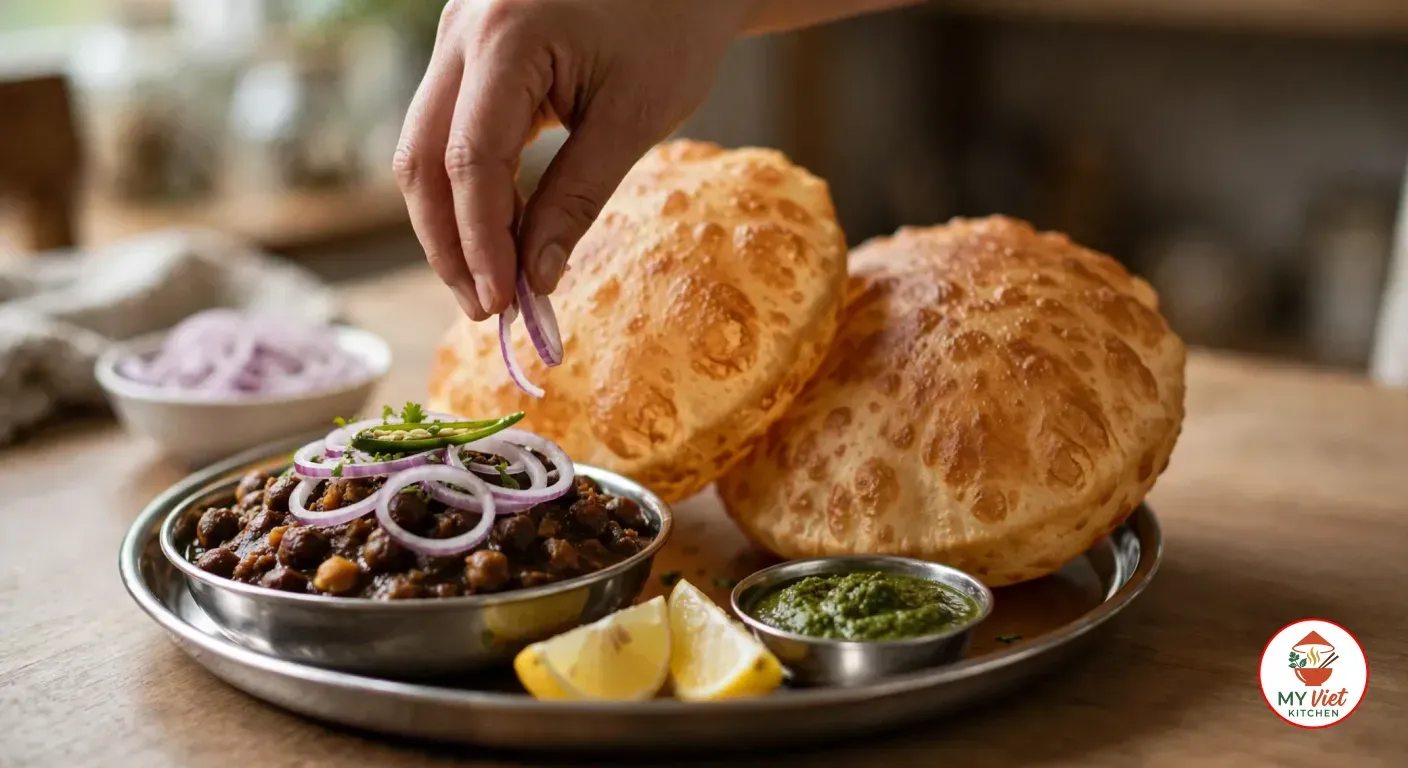
6Spoon the chole into bowls and top each one with a few rings of red onion, a slit green chili and a pinch of cilantro. Set two hot bhature beside each bowl, with lemon wedges for squeezing over the curry and a spoonful of green chutney or mango pickle. Serve right away, because the bhature start to sink within a few minutes. Tear the bread with your fingers and scoop up the chole with it.
Frequently Asked Questions
Can I use canned chickpeas?
Yes. Use two 400 g (15 oz) cans, drained and rinsed, and skip the soak and the pressure cooker. To darken them, simmer the chickpeas in 2 cups (480 ml) of water with the two tea bags for 10 minutes. Then lift out the bags and use that liquid in step 3. With the dough’s 2-hour rest, the whole meal takes under 3 hours.
Can I cook the chickpeas without a pressure cooker?
Yes, in a heavy pot with a lid. Use 6 cups (1.5 liters) of water with the tea bags and salt and bring it to a boil. Then simmer gently for 1 to 1 1/2 hours, until a chickpea crushes easily between two fingers. Pour in more hot water whenever the chickpeas start to poke above the surface. Older dried chickpeas can take longer.
Why did my bhature come out flat or oily?
Usually the oil was too cool. Below about 180°C (355°F) the dough sits in the oil and soaks it up before it can puff, so check that a pinch of dough rises within 2 seconds. A round rolled thinner than 3 mm, or one with a tear, lets the steam escape. A stiff or under-rested dough also stays flat; it should feel soft and slightly tacky after its 2-hour rest.
Can I leaven the dough with yeast instead?
Yes. Yeast is one of the usual leaveners for bhatura (Wikipedia). Leave out the baking powder and baking soda, stir 1 teaspoon of instant yeast into the flour, and keep the yogurt for its tang. Let the dough rise in a warm spot for 1 1/2 to 2 hours, until it has grown by about half, then roll and fry as in step 5.
Is chole the same as chana masala?
Yes, they are two names for the same chickpea curry, which is also called chole masala or chholay (Wikipedia). Chana masala is eaten with puri, kulcha or other flatbreads too. Chole bhature is the pairing with fried bhature, and in this recipe the chole is cooked darker and sourer to stand up to the bread.
Sources
- The Indian street food bringing theatre to your plate, BBC News, July 2016
- I would pick a well-made Chole Bhature over filet mignon, says Kunal Vijayakar, Hindustan Times, November 2018
- The Many Legends Behind The Origin Of Chole Bhature, Outlook Traveller, August 2023
- Bhatura, Wikipedia
- Chana masala, Wikipedia