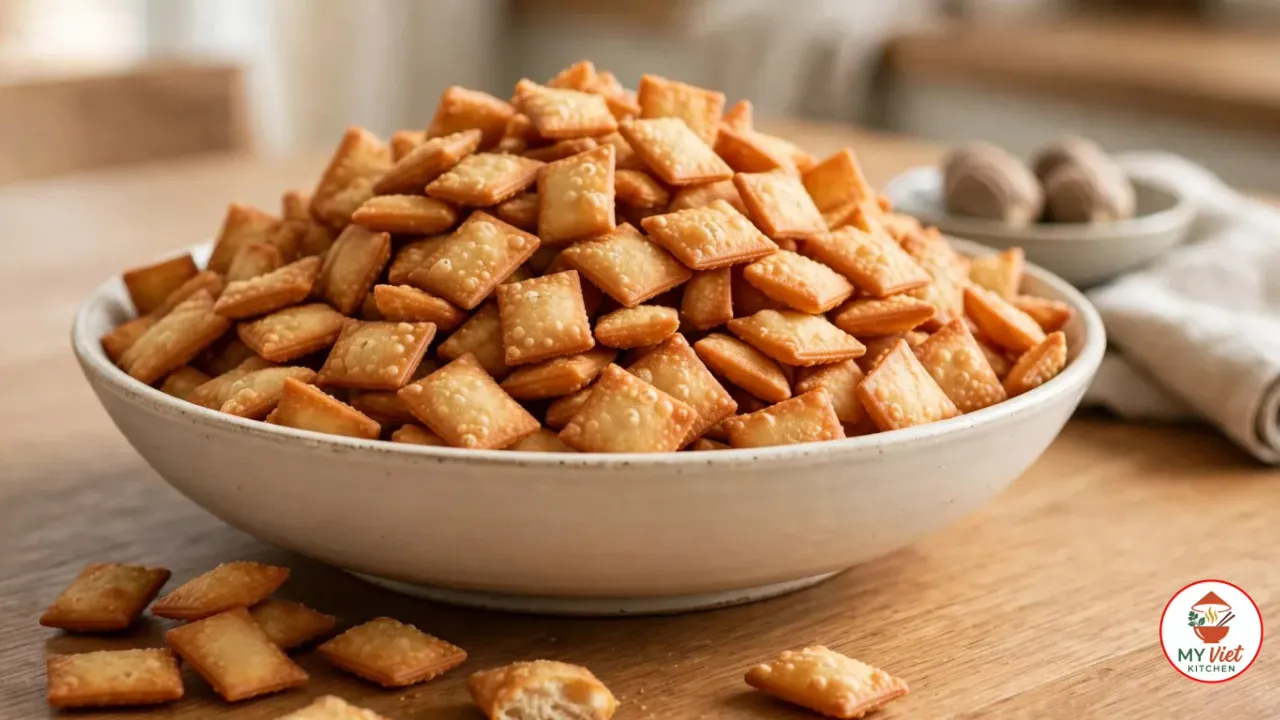
Chin chin is a crunchy Nigerian snack of sweet, nutmeg-scented dough, rolled thin, cut into small pieces and deep-fried until golden. The dough is stiff, closer to shortbread than to bread, so the fried pieces snap instead of chew. This batch turns 3 cups of flour into 8 servings. Frying takes about 25 minutes in batches, and the pieces need another 20 minutes on a tray to finish crisping.
Prep Time: 30 minutes | Cook Time: 25 minutes | Total Time: 1 hour 15 minutes, including 20 minutes of cooling | Servings: 8
Difficulty: Easy | Calories: ~340 per serving

How Stiff Should Chin Chin Dough Be?
Recipes share a base of flour, sugar, butter and milk, and add eggs, citrus zest or baking powder as the cook prefers (Wikipedia). The same snack is called achomo in Ghana, atchomon in Togo and Benin, and croquette in Cameroon. Whatever the name, the amount of liquid decides the texture more than any flavoring.
Start with the butter. Rub it into the flour until no lump is bigger than a lentil and a squeezed handful holds together for a second before it falls apart. Once the egg and milk go in, the dough looks ragged. Knead it for 1 to 2 minutes, no longer. It’s right when it is smooth, takes a thumbprint without cracking at the edges and leaves nothing on your palm. Work in another tablespoon of evaporated milk if it crumbles, or a spoonful of flour if it sticks.
A soft, tacky dough soaks up oil and comes out of the pot puffy and bready. A dry one splits as you roll it, and its edges scorch before the middle cooks. Overworked dough causes trouble too. If the sheet shrinks back after every pass of the pin, cover it with a bowl and give it 10 minutes before you carry on.
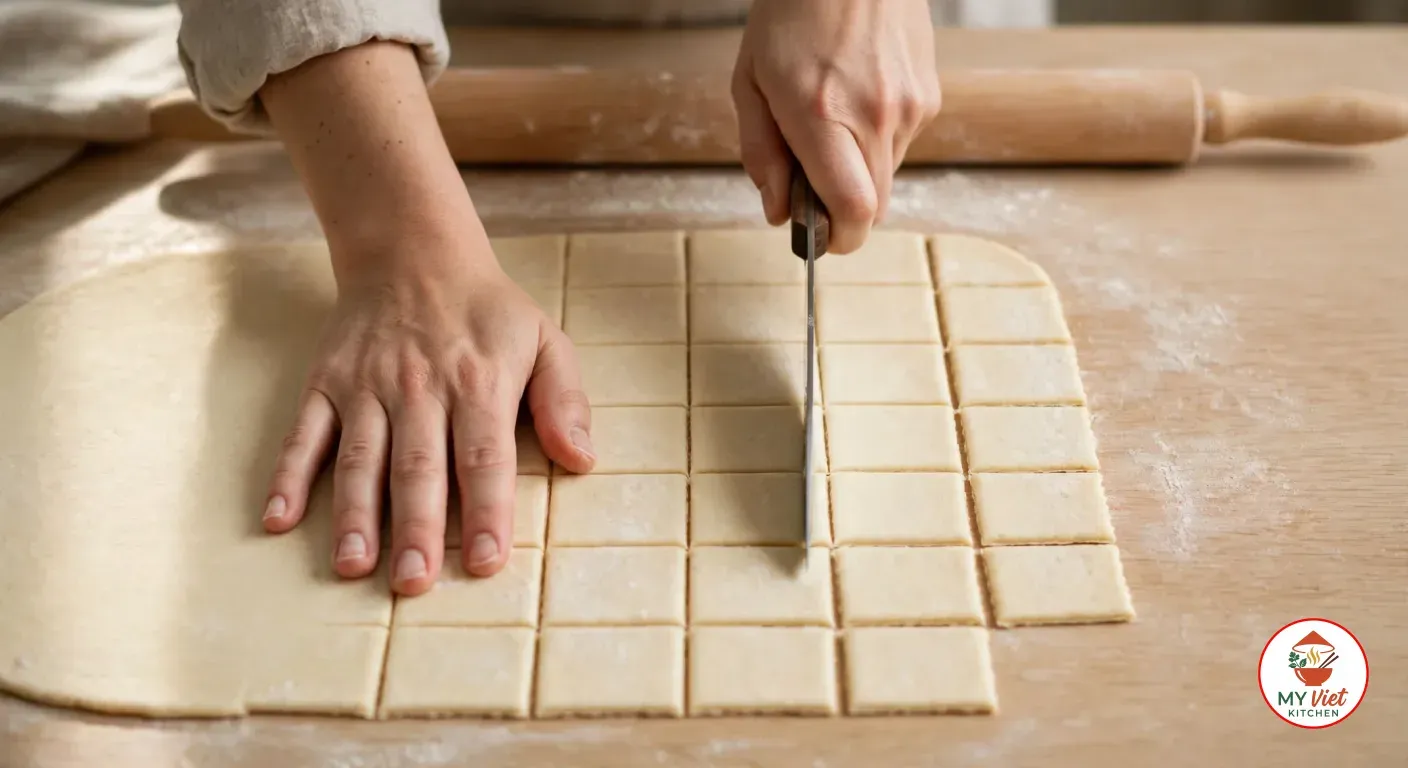
Roll it to 3 mm (1/8 inch), about the height of two stacked coins. Pieces that thin cook through in 3 to 5 minutes. Wikipedia describes the usual cut as squares of about 1 inch, roughly a quarter inch thick (Wikipedia). Cuts that thick need a longer, gentler fry, or the center stays raw.
What Oil Temperature Gets Chin Chin Crisp to the Center?
Fry at 350°F (175°C). Four cups of oil in a pot about 18 cm (7 inches) wide gives close to 4 cm (1½ inches) of depth, enough for the pieces to float freely. A clip-on thermometer is the surest check. Without one, drop in a single piece. A recipe published by the University of Lethbridge’s international office calls the oil ready when it bubbles around the piece and the piece floats up at once (University of Lethbridge). If it sinks and sits on the bottom, wait.
Add only as many pieces as will lie in one layer, about a large handful. The temperature dips the moment raw dough goes in, so let it climb back to 350°F before each new batch. Oil that stays below 325°F (165°C) gives greasy pieces that never crisp. Above 375°F (190°C), the sugar in the dough browns before the inside has dried.
Stir with a slotted spoon every 30 seconds or so for even color. The pieces are ready after 3 to 5 minutes, when they are light golden brown all over and the bubbling around them has quietened. Take them out a shade lighter than you want, because they keep darkening for a moment after they leave the oil (All Nigerian Recipes). From the first batch, let one piece cool for a minute and break it. The inside should be dry and evenly pale, with no doughy line through the middle.
Why Does Chin Chin Get Crunchier as It Cools?
Straight from the pot, the pieces bend slightly when you press them. Steam is still leaving them, and the sugar and butter in the dough are soft while hot. As they cool, the last moisture escapes and the sugar sets hard, so each piece firms up to a clean snap. Judge a batch only once it’s cold. A piece that still bends at room temperature came out too early or was cut too thick, so give the next batch another minute.
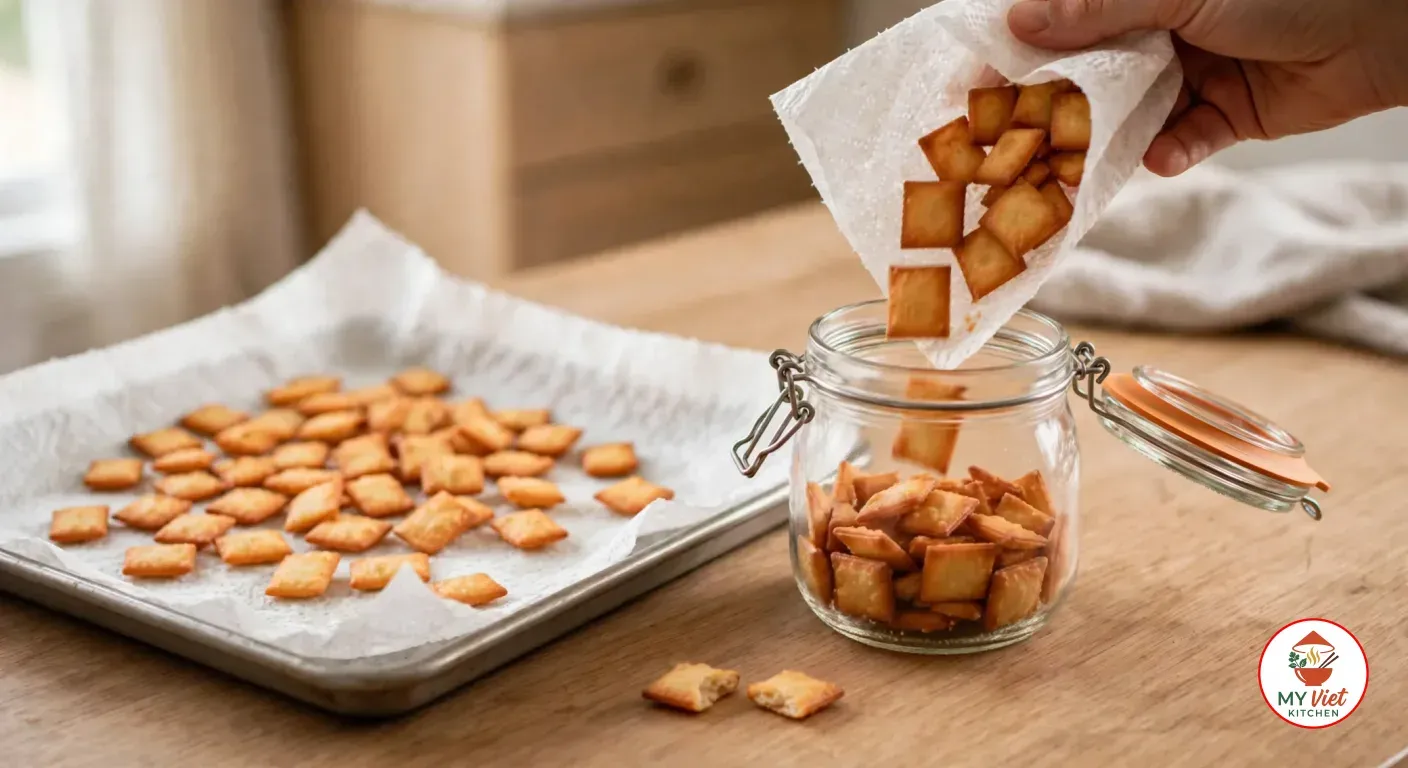
Give them room to cool, one layer deep, on paper towels. Piled in a bowl, the hot pieces on top steam the ones underneath. A full tray takes about 20 minutes to reach room temperature. Close a container on chin chin that is still warm and water beads under the lid, and the crunch goes.
Once cold, they go into anything that seals: a lidded tin, a clip-top jar or a heavy zip bag with the air pressed out. Store it at room temperature, away from the stove and sunlight. All Nigerian Recipes also suggests the fridge or freezer for longer keeping (All Nigerian Recipes). With the air kept out, they stay crisp for a long time. The butter and oil in them are what turn stale first, so eat a batch within about 2 weeks. If a jar has gone soft, give the pieces 5 minutes on a tray at 300°F (150°C) and let them cool again before you close it.
Ingredients for Chin Chin
For the Dough:
- 3 cups (375 g) all-purpose flour
- 1/3 cup (65 g) granulated sugar
- 1/4 teaspoon salt
- 1/2 teaspoon baking powder
- 1/2 teaspoon ground nutmeg
- 1/4 teaspoon ground cinnamon (optional)
- Zest of 1 orange or lemon (optional)
- 2 tablespoons (28 g) unsalted butter, cold and cubed
For the Wet Mix:
- 2 large eggs
- 1/3 cup (80 ml) evaporated milk, plus 1 tablespoon if needed
- 1 teaspoon vanilla extract
For Frying:
- Neutral frying oil, such as vegetable, canola or sunflower (about 4 cups / 1 liter)
Step-by-Step Instructions
Step 1: Mix the Dry Ingredients
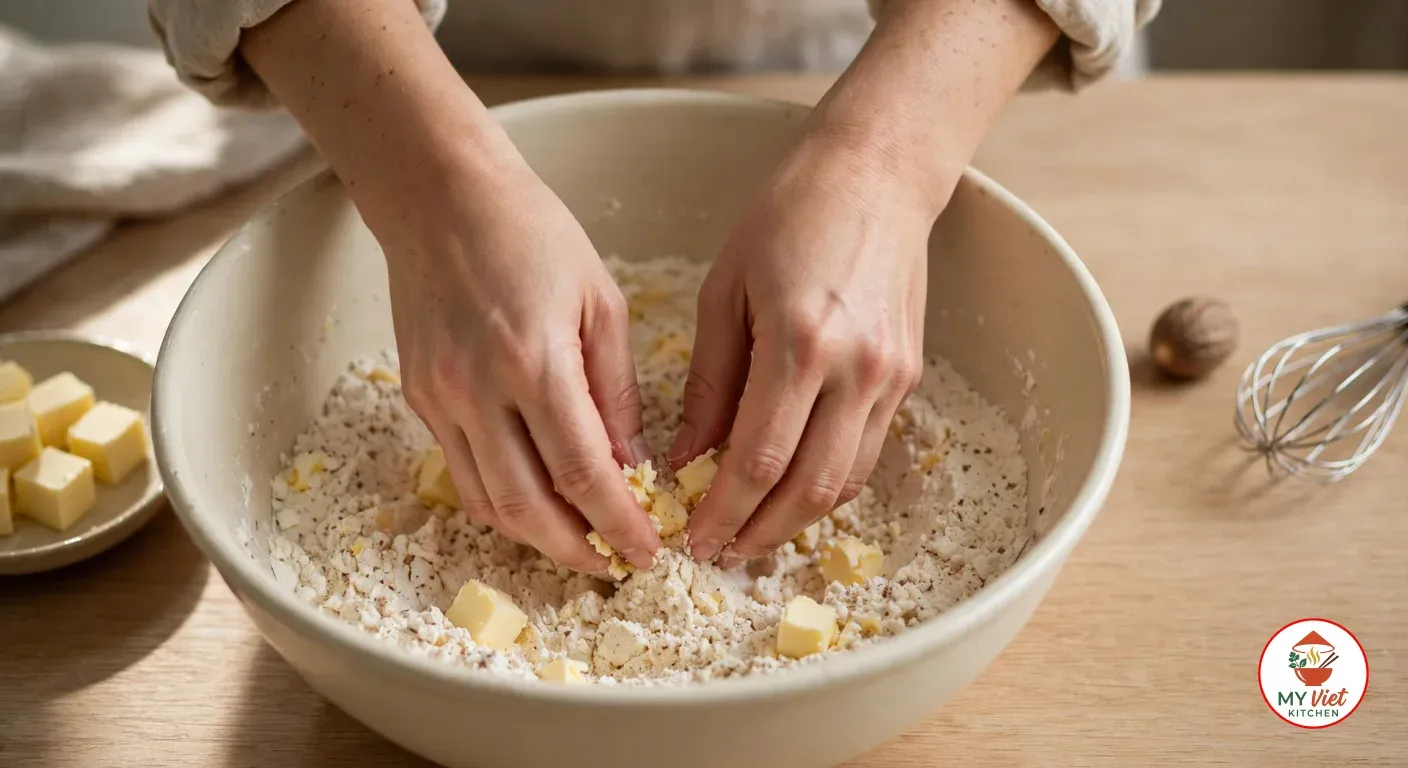
1In a large bowl, whisk the flour with the sugar, salt, baking powder, nutmeg and the cinnamon, if you’re using it, so the sugar and spice are spread evenly. Stir in the orange or lemon zest, if using. Scatter the cold butter cubes over the top. Pinch and rub them into the flour with your fingertips, lifting the mixture as you go, for about 3 minutes. Stop when it looks like coarse breadcrumbs and you can’t find a lump of butter bigger than a lentil.
Step 2: Add the Wet Ingredients
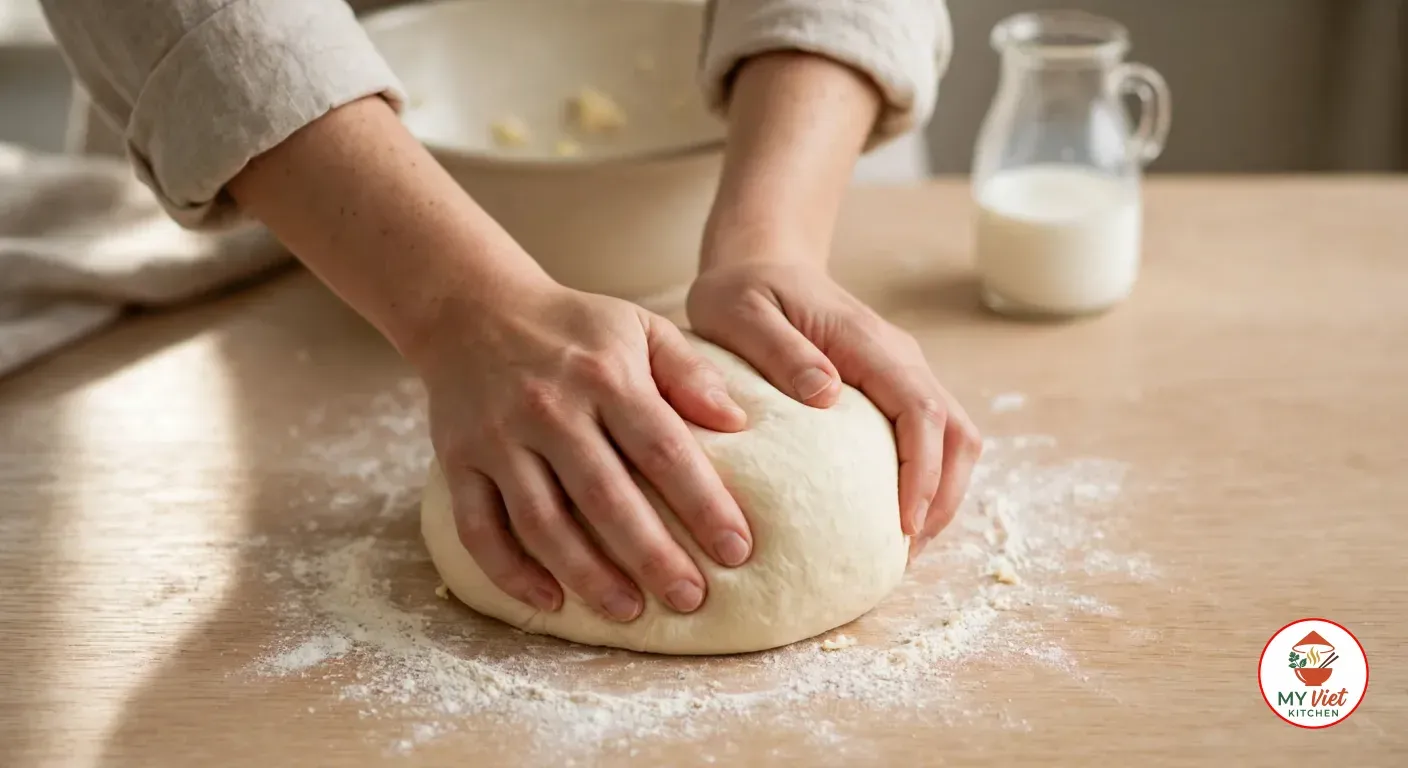
2In a jug or small bowl, beat the eggs with the evaporated milk and vanilla until no streaks of yolk remain. Pour the mixture into the flour and stir with a wooden spoon until it clumps into a shaggy, stiff dough, then press any dry bits into it with your hand. Knead it on a lightly floured counter for a minute or two. It should turn smooth and firm and stop clinging to your fingers. If it still crumbles after a minute of kneading, work in the extra tablespoon of evaporated milk.
Step 3: Roll and Cut the Dough
3Cut the dough into 3 pieces and keep two covered while you work. Dust the surface and rolling pin lightly with flour and roll the first piece into a sheet 3 mm (1/8 inch) thick, turning it often so it rolls evenly. With a sharp knife or pizza cutter, cut it into strips about 1.5 cm (1/2 inch) wide. Then cut across the strips into 2.5 cm (1 inch) pieces, or on the diagonal for diamonds. Toss the pieces in a sieve or shake them on a tray to knock off the loose flour, which would otherwise burn in the oil. Repeat with the other two pieces.
Step 4: Deep Fry Until Golden
4Pour the oil into a deep, heavy pot and heat it over medium heat to 350°F (175°C). Lower in a handful of pieces, enough to cover the surface in a single layer. They sink, then rise within seconds. Stir them every 30 seconds or so. After 3 to 5 minutes they’ll be light golden brown and the bubbling will have slowed. Lift them out with a slotted spoon, let the oil drip back for a few seconds and tip them onto the paper-lined tray. Check that the thermometer is back at 350°F before you add the next batch.

Step 5: Cool and Store
5Spread each fried batch in a single layer on a tray lined with paper towels, adding more trays as you need them. Leave the pieces for about 20 minutes, until completely cool. They harden as they cool, and a cold piece should snap cleanly in two. Tip them into an airtight container or a jar with a tight lid and keep it at room temperature.
Frequently Asked Questions
How is chin chin different from puff puff?
Puff puff is a soft ball of yeast-raised dough, fried until puffy (Wikipedia). Chin chin is a stiff dough, rolled and cut into small flat pieces, then fried until crunchy. Puff puff batter is wet enough to drop from a spoon, and it tastes best warm on the day it’s fried. Chin chin is made to be stored, and it keeps its crunch in a sealed container.
Can I bake chin chin instead of frying it?
Yes, though it comes out closer to a crisp cookie than to fried chin chin. Coat the raw pieces in 1 tablespoon of melted butter and lay them out, not touching, on a sheet pan lined with parchment. They need 15 to 20 minutes at 350°F (175°C), with a stir halfway through. Take them out when the edges turn golden. Leave them on the sheet to cool, as they firm up the same way fried pieces do.
Why is my chin chin greasy or soft in the middle?
Usually the oil was too cool or the pot too full. Below about 325°F (165°C) the pieces cook slowly, take in more oil and stay pale. Put fewer pieces in at a time, and don’t start the next batch until the thermometer reads 350°F (175°C) again. If the outside is brown but the middle is still soft once the pieces have cooled, they were cut too thick, so roll the next portion thinner.
Can I make chin chin without eggs?
Yes. Many chin chin recipes treat eggs as optional (Wikipedia). Leave both out and add about 1/3 cup (80 ml) more evaporated milk, a tablespoon at a time, until the dough comes together. Eggless pieces are paler and a little less rich, with a more crumbly bite, and they fry in the same time.
Sources
- Chin chin, Wikipedia
- Puff-puff, Wikipedia
- Chin Chin by Anu Adeosun, University of Lethbridge
- Easiest Nigerian Chin Chin Recipe, All Nigerian Recipes