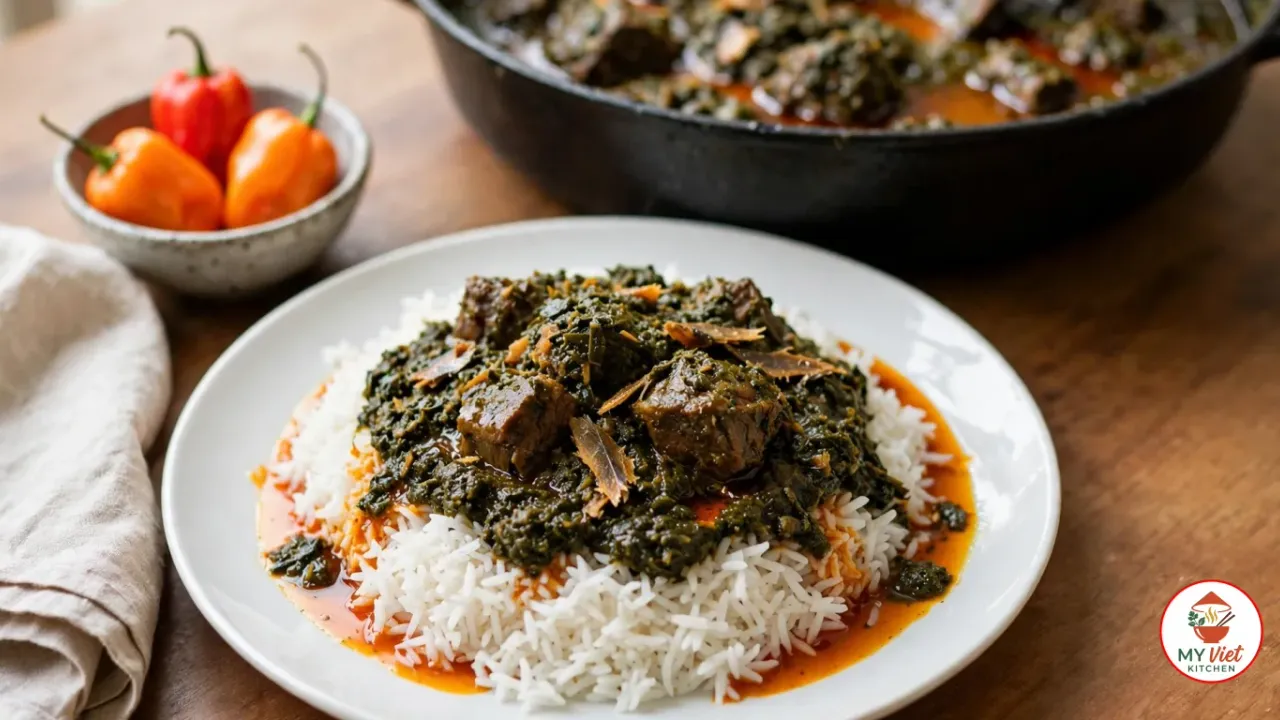
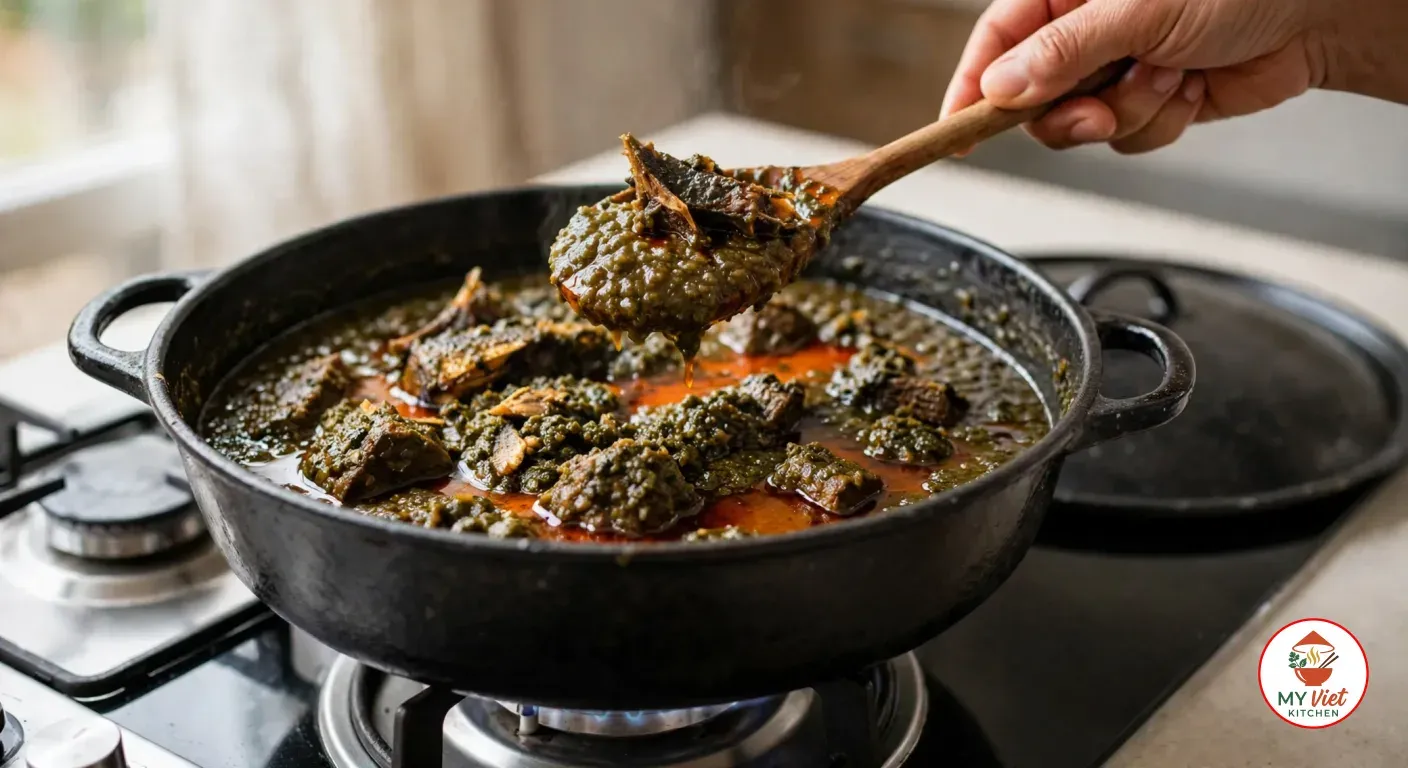
Cassava leaf stew is a West African dish of very finely ground cassava leaves cooked down with red palm oil, meat, fish and hot pepper until thick. In Liberia it is simply called cassava leaf, and it is eaten ladled over rice. This version uses beef, smoked fish, dried fish and ground crayfish, with optional crab. Fresh leaves are ground and boiled before they go into the pot. Frozen ground leaves from an African grocery skip the grinding.
Prep Time: 40 minutes | Cook Time: 2 hours | Servings: 6
Difficulty: Medium | Calories: ~570 per serving

Is Cassava Leaf Stew Liberian or Sierra Leonean?
Both countries cook it. Wikipedia’s article on Liberian cuisine lists cassava leaf among the stews Liberians call “soups”, next to palm butter, potato greens, pepper soup and palava sauce. It describes the dish as ground cassava leaves braised in a broth and mixed with red palm oil, and names rice as the staple that stews are poured over (Wikipedia).
Across the border, cassava leaves have been called Sierra Leone’s national dish, a label Wikipedia takes from Fran Osseo-Asare’s book Food Culture in Sub-Saharan Africa. Cooks there wash the tenderest leaves, pound them very finely or bruise them in a mortar, and shred them before they go into a palm oil stew with fish, meat and onions (Wikipedia).
Judy Cole’s Liberian recipe on SBS Food serves 8 and uses 1 kg of chicken or beef, 500 g of fresh or dried fish, three 500 g packs of ground cassava leaf, four Maggi Crevette (shrimp) stock cubes and 500 ml of red palm oil, simmered for 1 to 1 1/2 hours. She stirs the palm oil in at the end. Here it goes in first, to soften the onions and toast the crayfish, and the amount is cut to 1/2 cup for 6 servings.
Are Cassava Leaves Safe to Eat?
Yes, once they are ground and cooked. Food Standards Australia New Zealand says cassava leaves carry more protein, minerals and vitamins than the roots, but also more cyanogenic glycosides, which give off hydrogen cyanide as they break down (FSANZ). Raw leaves are never eaten.
J. Howard Bradbury and Ian Denton of the Australian National University measured how fast those compounds go. In their 2014 paper in Food Chemistry, pounding alone left 28% of the leaves’ total cyanide. Letting the pounded leaves stand for 2 hours in the sun brought that to 12%, and three washes in water to 1%. Boiling the pounded leaves, the traditional method, removed all of it within 10 minutes (Food Chemistry abstract).
Boiling has a cost. The same paper notes that it turns the leaves a dull green and loses a good share of their vitamins, protein and methionine. FSANZ lists gentler options for fresh leaves, such as pounding them for at least 10 minutes and washing them in twice their weight of water, which cuts cyanide by 92%. This recipe still gives the leaves a 15-minute boil and then an hour in the stew. The bright color is gone after that long either way, and boiling leaves no doubt about safety.
Treat frozen ground leaves as raw unless the pack says they are cooked, and boil them the same way.
Fresh or Frozen Cassava Leaves?
Frozen ground cassava leaves are the practical choice outside West Africa. African grocers sell them in packs of about 1 pound (500 g), already ground fine, and 2 packs make this recipe. Thaw them overnight in the fridge and tip them, liquid and all, into the boiling water in Step 1.
Fresh leaves take more work. Pick young, tender leaves, pull each one off its stalk and throw out any that have yellowed. A mortar and pestle is the traditional tool. In a food processor, grind for 2 to 3 minutes, scraping down the sides, until the leaves look like a dark, wet paste with no recognizable pieces. Coarse leaves stay stringy no matter how long they simmer.
Without cassava leaves, collard greens or kale chopped very fine give a stew with similar body and a milder, cabbage-like taste. Sweet potato leaves are another option. Liberians cook them into a stew of their own called potato greens (Wikipedia).
Ingredients for Cassava Leaf Stew
For the Leaves:
- 2 pounds (900 g) fresh cassava leaves, or frozen ground cassava leaves, thawed
Meat and Fish:
- 1 pound (450 g) stewing beef, cut into 1-inch (2.5 cm) chunks
- 1/2 pound (225 g) smoked fish
- 1/4 pound (115 g) dried fish
- 1/2 pound (225 g) crab claws, cracked (optional)
- 5 cups (1.2 liters) water, for the beef
Stew Base and Seasoning:
- 1/2 cup (120 ml) red palm oil
- 2 medium onions, diced
- 3 habanero peppers, seeded and minced
- 1/2 cup (40 g) ground dried crayfish
- 1 seasoning cube (Maggi or Knorr), crushed
- 1 teaspoon salt, plus more to taste
- 1/2 teaspoon ground black pepper
Step-by-Step Instructions
Step 1: Prepare the Cassava Leaves
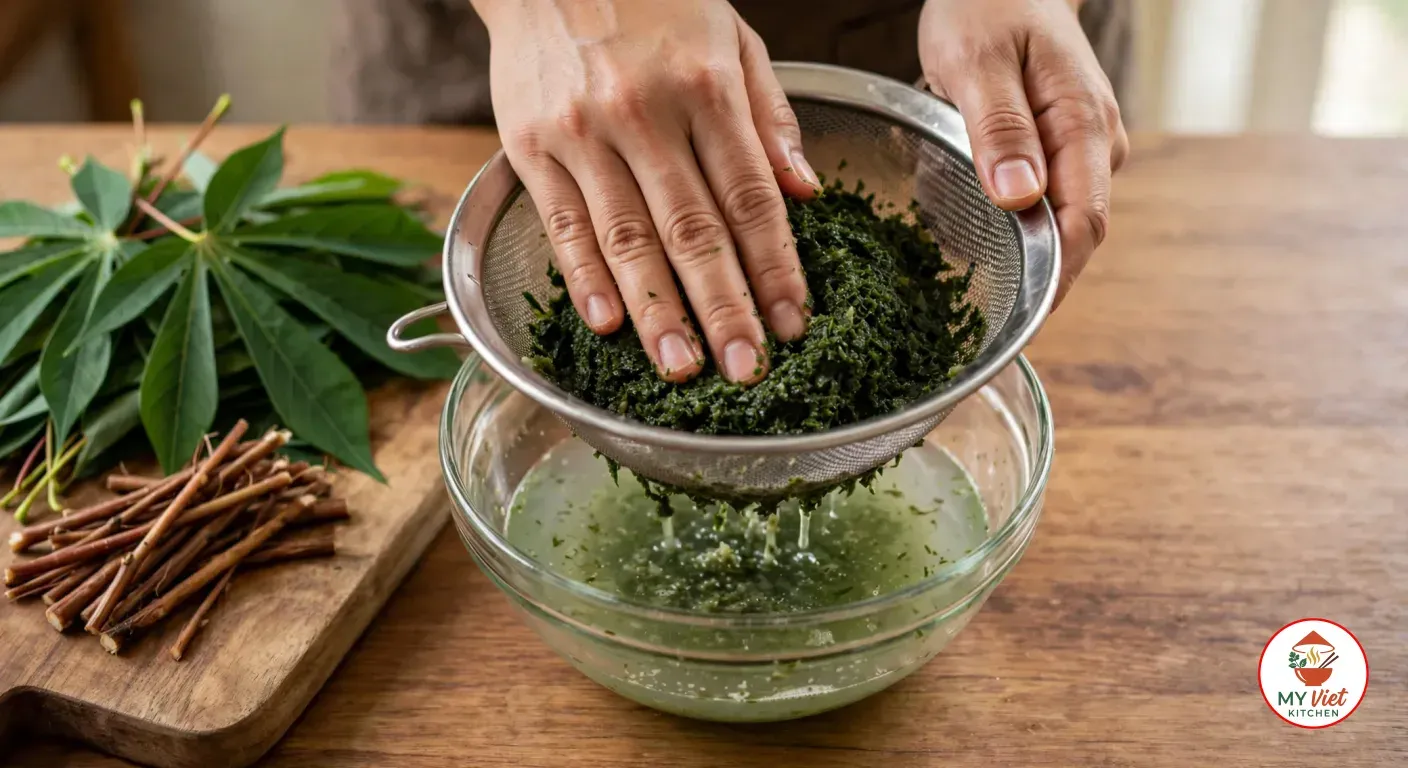
1For fresh leaves, pull each leaf off its stalk, rinse the leaves in two changes of cold water and grind them in batches in a food processor for 2 to 3 minutes, or pound them in a mortar, until they form a fine, wet paste. For frozen ground leaves, thaw them completely. Bring a large pot of water to a boil, add the leaves and boil uncovered for 15 minutes, stirring now and then. Drain them in a fine-mesh sieve and press them with your hand or the back of a spoon to squeeze out as much water as you can. Discard the cooking water.
Step 2: Cook the Beef and Prepare the Fish
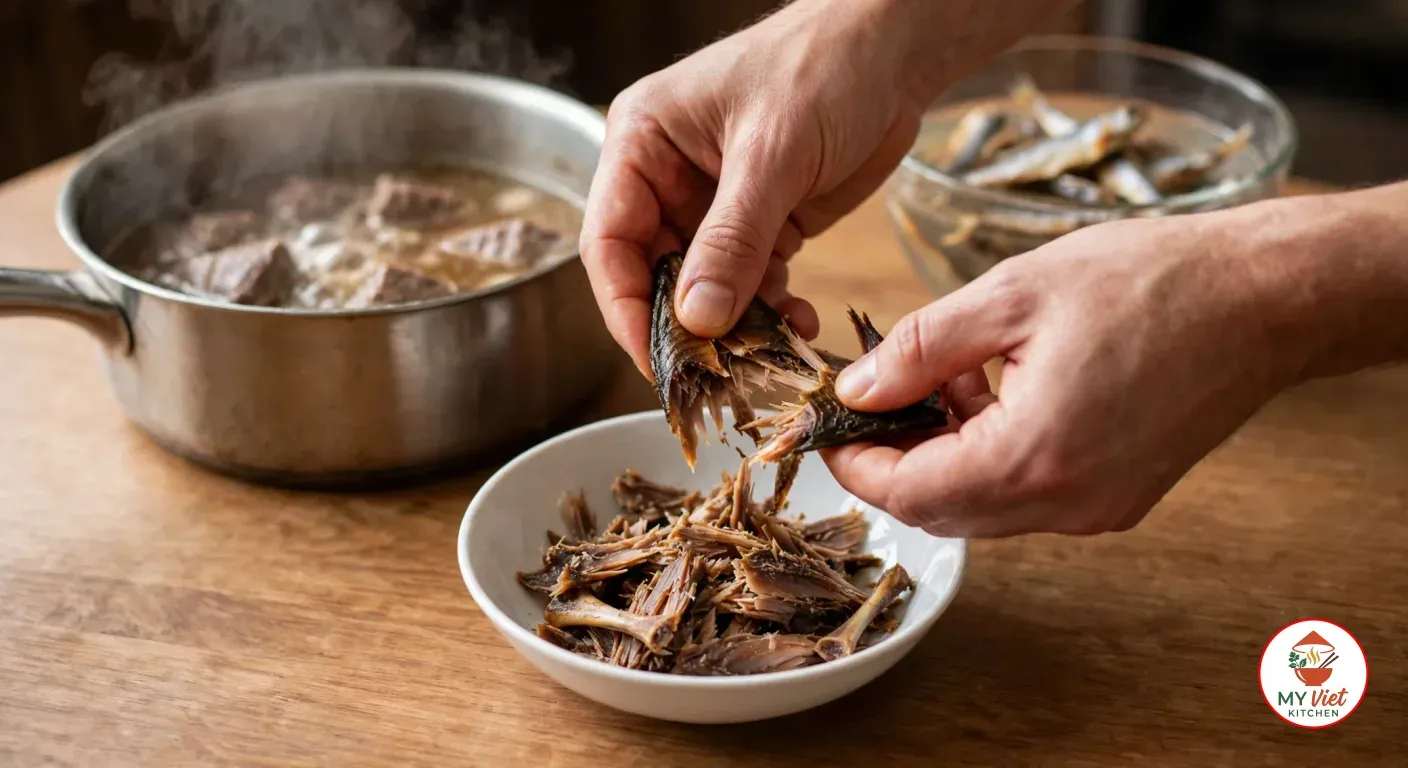
2Toss the beef with the salt, black pepper and crushed seasoning cube. Put it in a saucepan with the 5 cups of water, bring it to a boil and skim off the foam. Lower the heat and simmer, partly covered, for 45 minutes, until a chunk is nearly tender when pierced. Lift out the beef and keep 3 cups of the broth. While the beef cooks, soak the dried fish in warm water for 15 minutes, then drain it and shred it into small pieces. Break the smoked fish into flakes, pulling away the skin and every bone you can find. Crack the crab claws, if using.
Step 3: Build the Stew Base
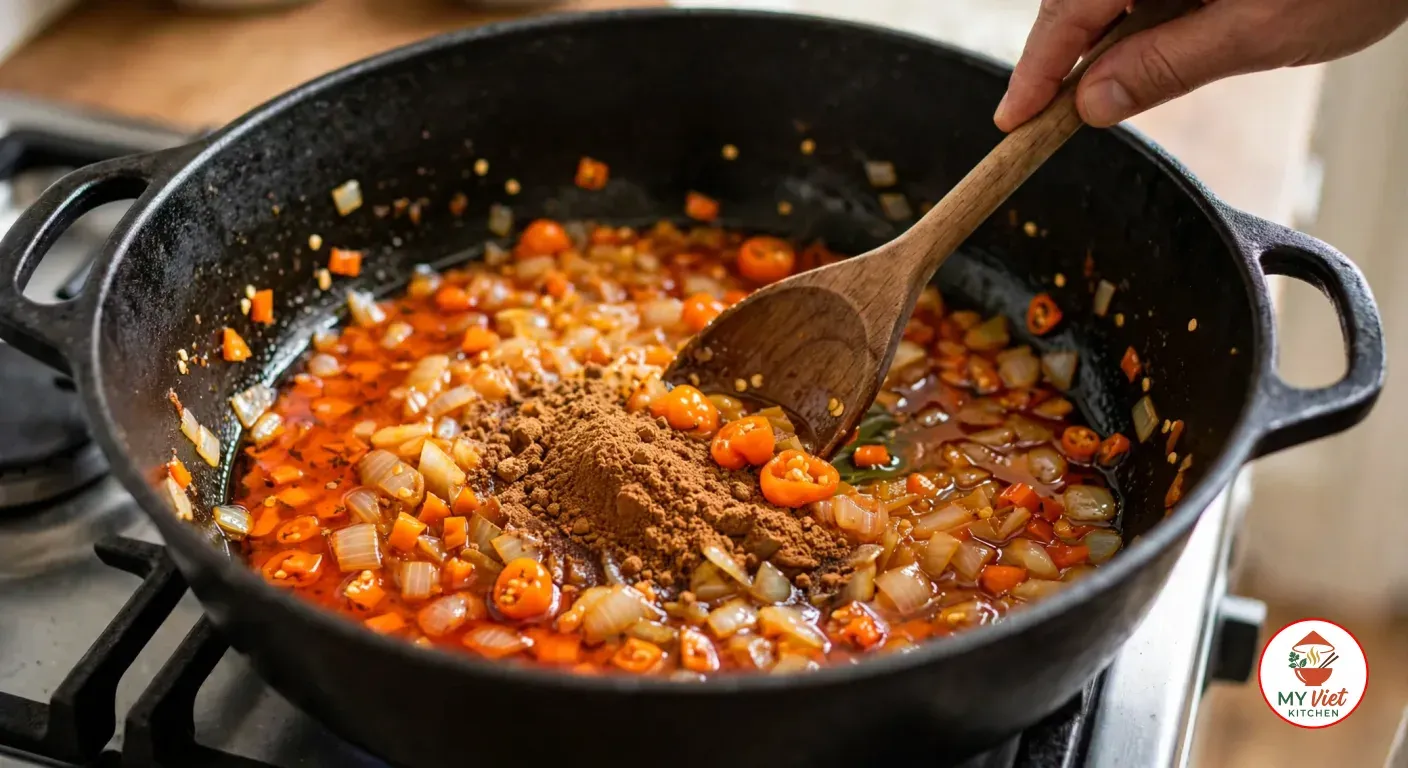
3Warm the palm oil in a large, heavy pot over medium heat until it melts and turns clear orange. Add the onions and cook for about 5 minutes, stirring often, until soft and translucent. Stir in the habaneros and ground crayfish and cook for 2 minutes more, scraping the bottom so the crayfish doesn’t scorch. Keep the window open or the fan on: hot pepper in hot oil makes the air sting.
Step 4: Combine the Leaves, Meat and Fish
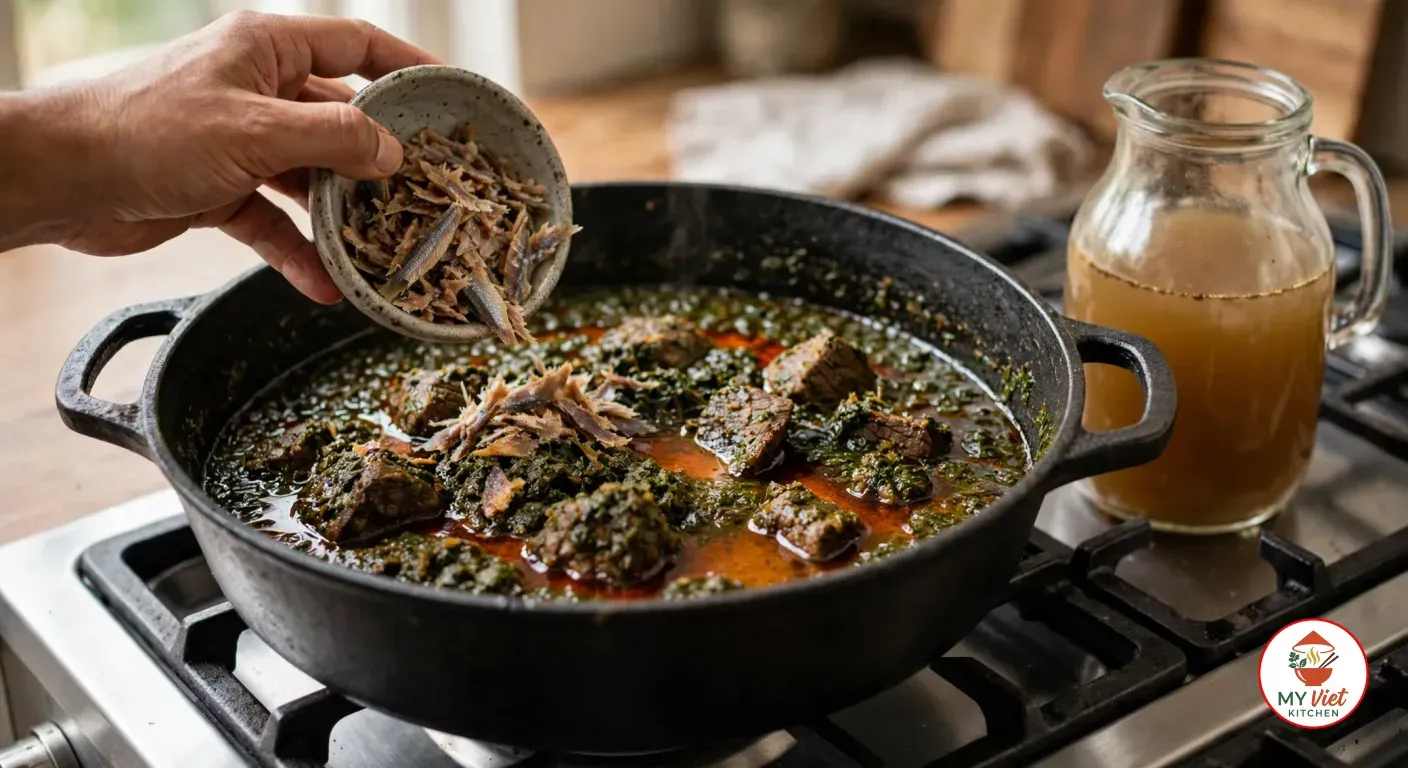
4Add the drained leaves to the pot and stir until every part is coated in the red oil. Cook for 5 minutes, stirring now and then. Pour in the 3 cups of beef broth, then add the beef, smoked fish, dried fish and crab claws, if using, and stir them through the greens. Bring the pot to a boil, then turn the heat to low.
Step 5: Simmer Until Thick
5Cover the pot and simmer for 45 to 60 minutes. Every 10 minutes, stir and scrape the bottom, where the thick greens catch easily; add a splash of water if they start to stick. The stew is ready when the beef is tender, the leaves have softened into a thick, smooth mass and a layer of red oil has risen to the surface. Taste and add salt if needed. Rest the pot off the heat for 5 minutes, then serve over rice.
Frequently Asked Questions
Is cassava leaf the same as palava sauce?
Not in Liberia, where palava sauce is a separate stew of jute leaves, called plateau, cooked in a broth (Wikipedia). Elsewhere the names overlap. Wikipedia treats palaver sauce, palava sauce and plasas as one family of West African leaf stews. In Ghana it is made with cocoyam leaves as kontomire stew, and in Sierra Leone finely pounded cassava leaves go into it (Wikipedia).
Do you put peanut butter in cassava leaf stew?
Some cooks do, and it is optional. The ingredient list under the Cooking with Winn video above marks peanut butter as optional. To try it, whisk 2 tablespoons of smooth peanut butter into a ladle of hot broth and stir it into the pot in Step 4. The stew turns a little creamier and sweeter.
What do you eat with cassava leaf stew?
Rice, most of the time. Rice is the staple of the Liberian diet, and stews are poured over it. Heavy stews spiced with habanero and Scotch bonnet are also eaten with fufu (Wikipedia). Judy Cole serves her cassava leaf with rice and an extra-hot Liberian chilli sauce (SBS Food). Plan on about 1 cup of cooked rice per person.
How can I make cassava leaf stew less spicy?
Use 1 habanero instead of 3, with the seeds and pale ribs cut away. For even less heat, drop 1 or 2 whole, unbroken peppers into the pot in Step 4 and lift them out before serving. Anyone who likes it hotter can add pepper sauce at the table.
Sources
- Liberian cuisine, Sierra Leonean cuisine and Palaver sauce, Wikipedia
- Liberian cassava leaf and meat, Judy Cole and Victoria Zinnah, SBS Food, 2019
- Cassava and bamboo shoots, Food Standards Australia New Zealand
- Mild method for removal of cyanogens from cassava leaves with retention of vitamins and protein, J. Howard Bradbury and Ian C. Denton, Food Chemistry, 2014