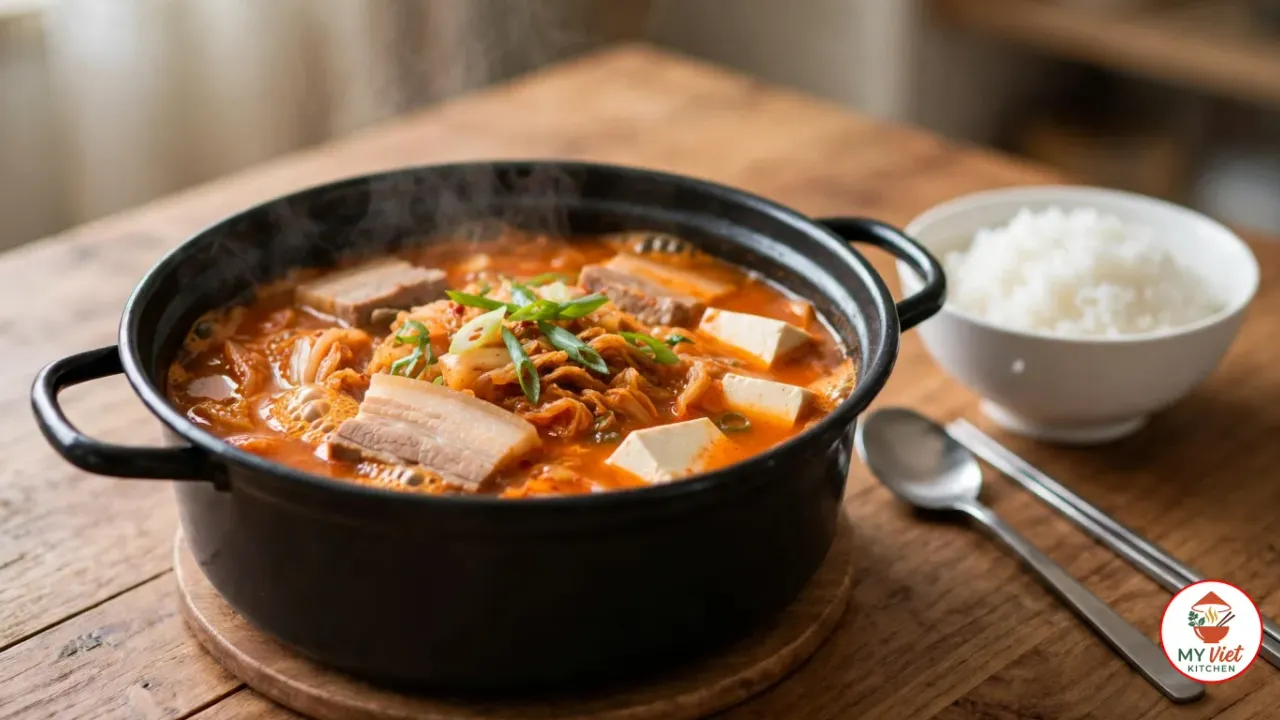
Kimchi jjigae (김치찌개) is a Korean stew of kimchi cooked with ingredients such as pork, scallions and diced tofu, and it is one of the most common stews in Korean cuisine (Wikipedia). It is also a thrifty dish: the Encyclopedia of Korean Folk Culture sees in it the wisdom of cooking leftover kimchi into a stew rather than throwing it away (Encyclopedia of Korean Folk Culture). This version follows Korean Bapsang’s pork belly and tofu method, scaled up to four servings.
Prep Time: 15 minutes | Cook Time: 35 minutes | Total Time: 50 minutes | Servings: 4
Difficulty: Easy | Calories: ~400 per serving

How Sour Should the Kimchi Be?
As sour as you can find. Kimchi’s flavor gets stronger and more complex as it ages, which is why the stew is usually made with older, riper kimchi (Wikipedia). Hyosun of Korean Bapsang says to use fully fermented, sour kimchi every time, the older the better, and points to the packaged mukeunji (묵은지), or old kimchi, that some Korean markets carry for stews (Korean Bapsang).
She has fixes for both extremes. A little vinegar helps kimchi that hasn’t soured yet, though she admits it won’t taste as good as the real thing, and a teaspoon or two of sugar calms kimchi that has gone too far (Korean Bapsang). Very long aging is a different case: kimchi fermented for more than six months at a low temperature has little sourness and a strong fermented flavor of its own, and simmered with thick pieces of pork and water it makes the ideal partner for a bowl of rice (Encyclopedia of Korean Folk Culture).
Which Meat Goes In?
Fatty pork is the favorite for kimchi jjigae in Korea, and Hyosun calls kimchi and fatty pork “a match made in heaven” (Korean Bapsang). She uses belly here; pork ribs work too if you boil them until fairly tender, 20 to 30 minutes, before they go into the stew (Korean Bapsang).
Fish is the other big branch. Canned tuna gives chamchi kimchi-jjigae, a camping and picnic favorite because it is quick to cook and easy to carry, and Pacific saury gives kkongchi kimchi-jjigae (Wikipedia). The folk encyclopedia also names mackerel as a stand-in for the pork (Encyclopedia of Korean Folk Culture). Add Spam, hot dogs and American cheese slices and the dish becomes budae-jjigae, the “army base” stew that grew out of US military supplies during the Korean War (Wikipedia). Growing up, Hyosun also ate a meatless kimchi jjigae made only with anchovy broth, which she remembers as clean-tasting (Korean Bapsang).
What Liquid Should You Use?
The stew simmers in water or in anchovy (myeolchi) stock (Wikipedia). Korean Bapsang suggests ssalddeumul (쌀뜨물), the cloudy water from the second or third rinse of your rice, which is common in Korean stews and thickens the broth slightly; chicken, bone or vegetable broth also work (Korean Bapsang). Her tips also say to cook the kimchi and pork together before any liquid goes in (Korean Bapsang). Add that juice whenever you have it, because it carries much of the flavor (Korean Bapsang).
Keep kimchi jjigae fairly thick. Next to jeongol, a dish built mainly around its broth, a jjigae holds less liquid, roughly half solid ingredients, and is seasoned more strongly (Wikipedia).
Where Does the Name Come From?
Jjigae is the Korean word for a stew, and many kinds are named after their main ingredient (Wikipedia). Joseon-period cookbooks don’t use the word at all. Dishes of this kind first appear in writing as jochi (조치) in the Siuijeonseo, compiled in the late Joseon period, where kimchi-jochi stewed chopped kimchi with seasoned beef cut into thin shreds and sliced pressed meat in soy sauce (Wikipedia). Two kinds of jochi were always on the king’s royal table (Wikipedia). The red stew came with red kimchi: chili peppers only reached Korea partway through the Joseon era, and kimchi-jjigae is assumed to have developed around that time (Wikipedia).
Ingredients for Kimchi Jjigae
For the Stew:
- 4 cups packed bite-size sour, fully fermented napa cabbage kimchi (about 600 g)
- 8 ounces (225 g) fresh pork belly
- 1 tablespoon cooking oil
- 2 to 6 teaspoons gochugaru (Korean red chili pepper flakes)
- 2 teaspoons minced garlic
- 1 cup (240 ml) juice from the kimchi jar, if you have it
- 4 1/2 cups (1.1 liters) water, rice-rinsing water or anchovy broth
To Finish:
- 12 ounces (340 g) soft or medium tofu
- 4 scallions
- Salt, soup soy sauce or regular soy sauce, to taste
- Ground black pepper, to taste
- 1 to 2 teaspoons sugar, only if the kimchi is very sour
A medium heavy pot of about 3 quarts (3 liters) with a lid holds this amount, with room for the tofu on top.
Step-by-Step Instructions
Step 1: Cut the Kimchi and Pork
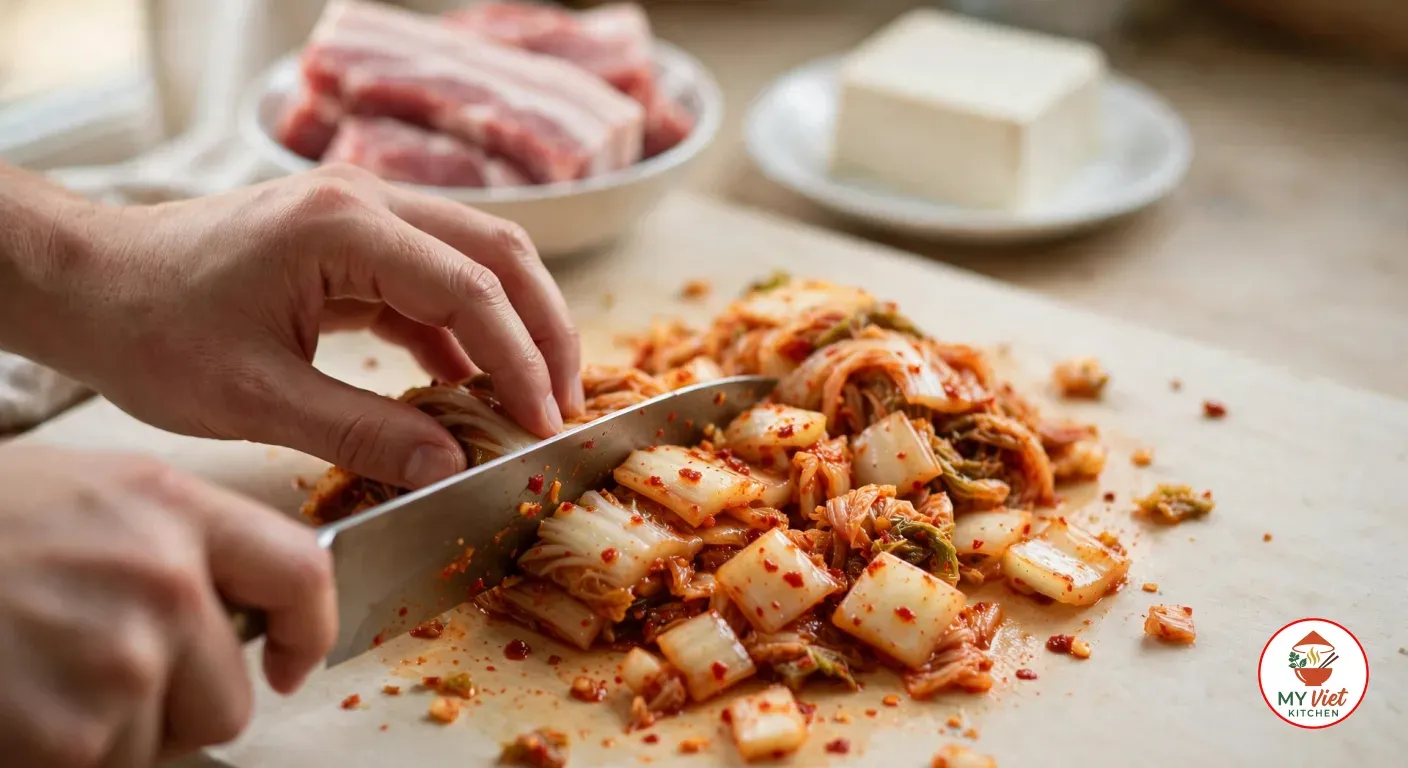
1Cut any large kimchi leaves into bite-size pieces and slice the pork belly into bite-size pieces too. Slice the tofu about 1/2 inch (1 cm) thick. Cut the scallions into lengths of about 2 inches (5 cm). Keep the tofu and scallions aside for the end.
Step 2: Fry the Kimchi with the Pork
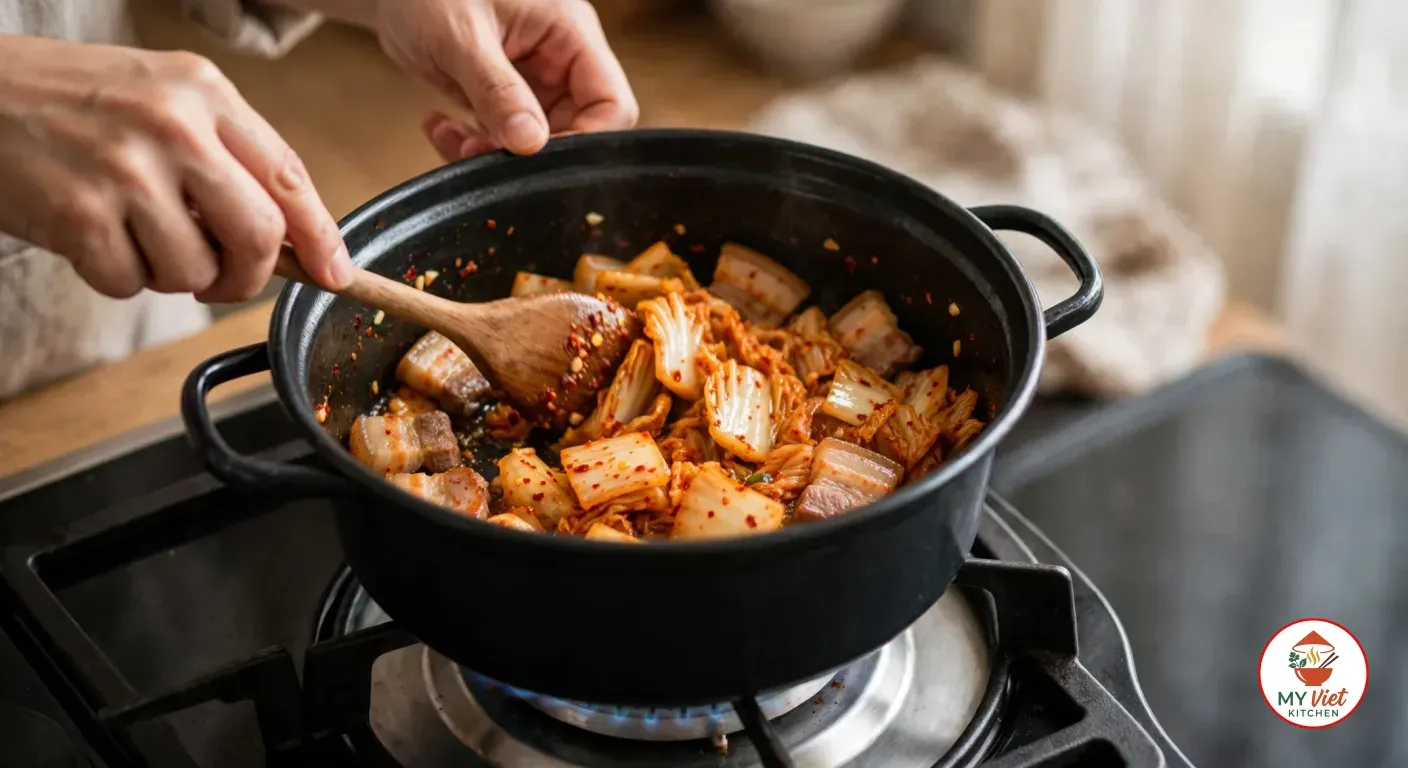
2Heat the oil in a medium heavy pot over medium-high heat. Add the kimchi, pork, garlic and 2 teaspoons of gochugaru. Keep them moving around the hot pot for 5 to 7 minutes, so the kimchi softens and the pork cooks through (Korean Bapsang). Taste a piece of kimchi and add more gochugaru now if you want more heat.
Step 3: Add Kimchi Juice and Water
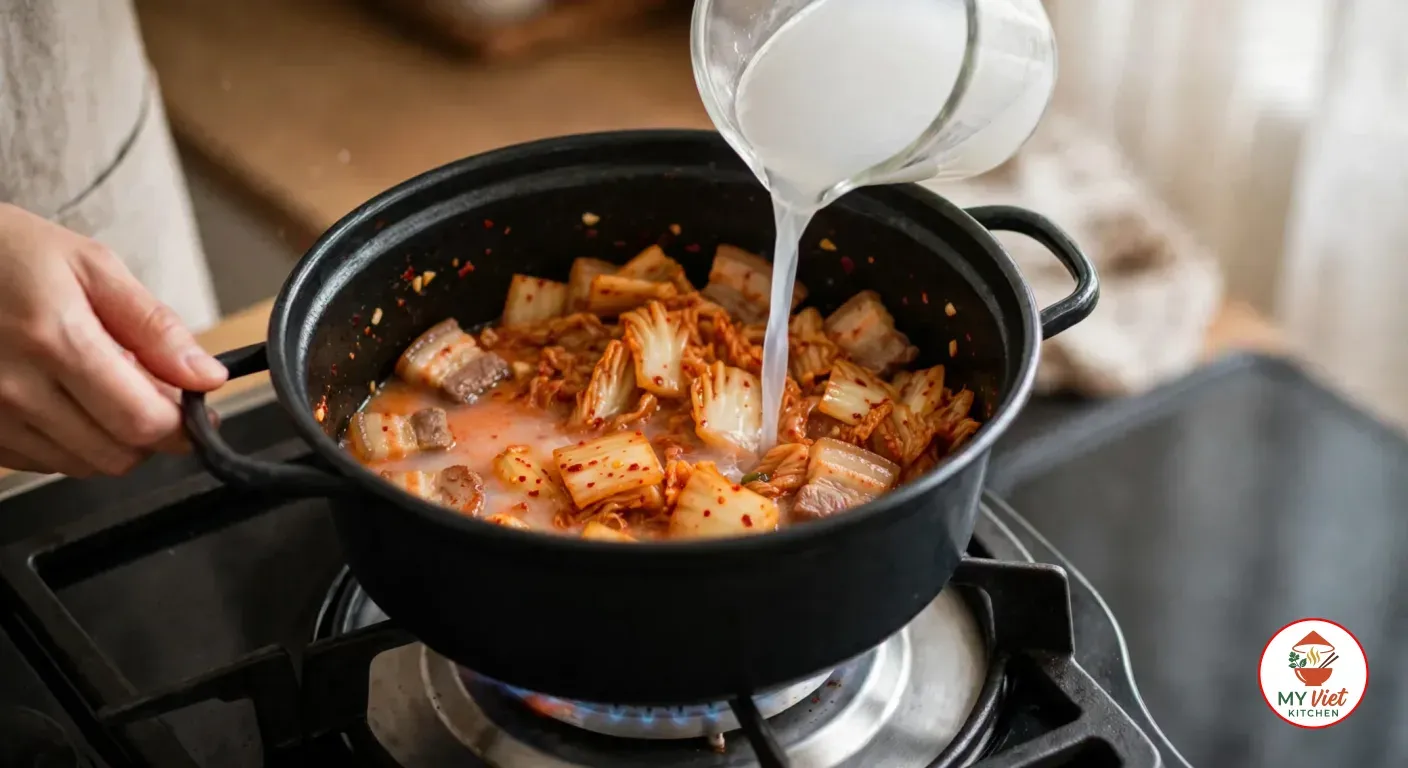
3Pour in the kimchi juice and the water or broth and bring everything to a boil. Let it boil for 5 minutes, then turn the heat to medium, cover the pot and keep it bubbling for about 15 minutes. Add a splash more water if the kimchi starts poking above the broth.
Step 4: Add Tofu and Scallions
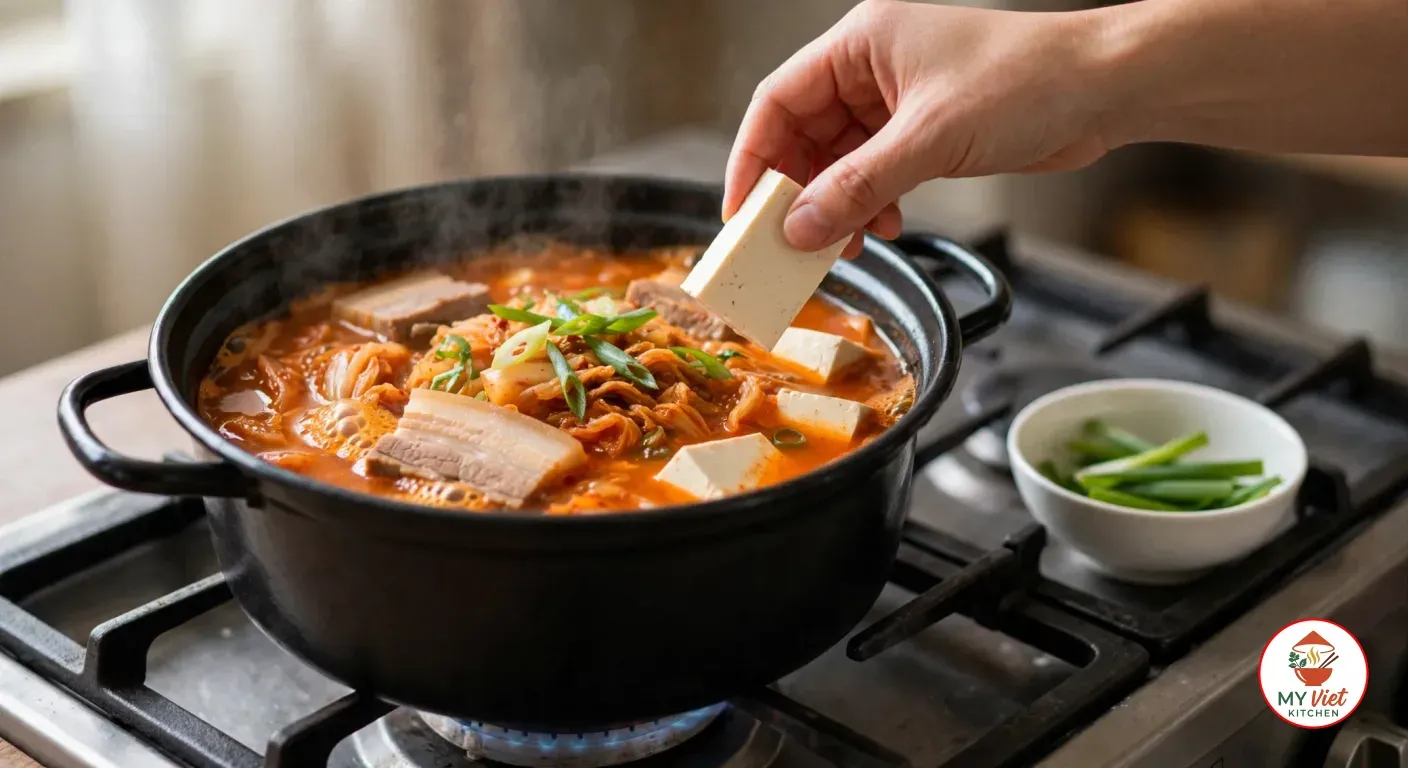
4Lay the tofu slices on top and scatter in the scallions. Taste the broth before seasoning: sour kimchi and its juice often carry enough salt, so add salt or soy sauce and pepper only if it tastes flat, and stir in the sugar if the sourness is harsh. Boil for about 5 minutes more, until the tofu is hot all the way through.
Step 5: Serve It Bubbling
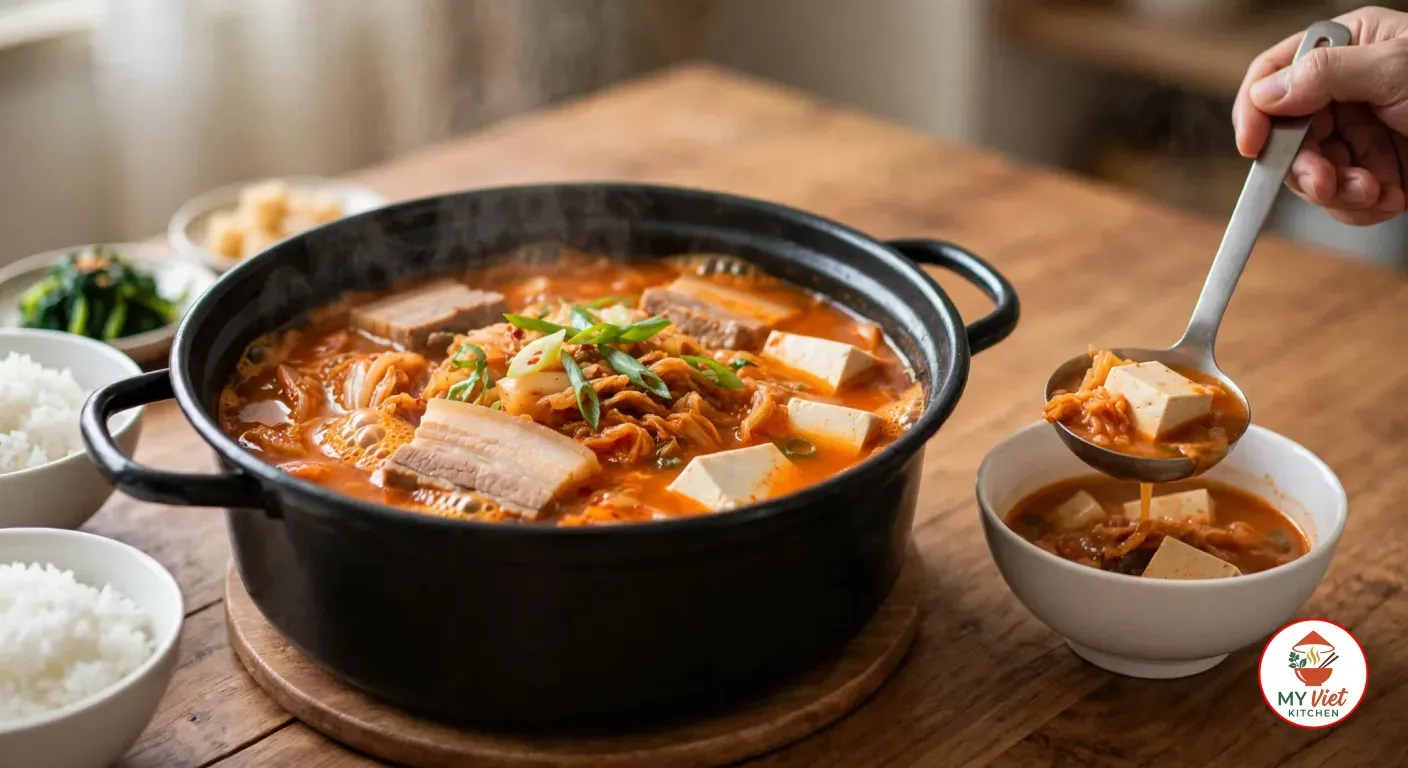
5Carry the kimchi jjigae straight to the table and set it on a trivet while it is still boiling. Everyone can eat from the pot or ladle their share into a small bowl, with rice and a few side dishes around it (Wikipedia).
Frequently Asked Questions
Is kimchi jjigae served in a stone pot?
Often, yes. Kimchi jjigae is usually cooked and served boiling hot in a stone pot (Wikipedia). Hyosun of Korean Bapsang uses an earthenware pot herself but tells readers that any pot they own will do (Korean Bapsang).
Should the tofu be soft or firm?
Soft if you can get it. Korean brands mark their stew tofu soft and 찌개용, meaning ‘for stew’, and with other brands medium or regular tofu is fine; Hyosun calls the difference purely one of texture (Korean Bapsang).
Does kimchi jjigae still have probiotics?
No. Riper kimchi holds more probiotics than young kimchi, but the live bacteria in uncooked kimchi do not survive the cooking (Wikipedia).
What if the broth runs low?
Top the pot up with water or a broth such as anchovy or chicken. If it then tastes thin, bring the seasoning back with more gochugaru and salt, soup soy sauce or salted shrimp (saeujeot) (Korean Bapsang).
Sources
- Kimchi-jjigae, Wikipedia
- Jjigae, Wikipedia
- Kimchi Jjigae (Kimchi Stew), Hyosun, Korean Bapsang
- Kimchijjigae, Encyclopedia of Korean Folk Culture, National Folk Museum of Korea
- How to make your best kimchi jjigae (kimchi stew)! It’s so flavorful, warming, and comforting!, Korean Bapsang, YouTube, March 2022