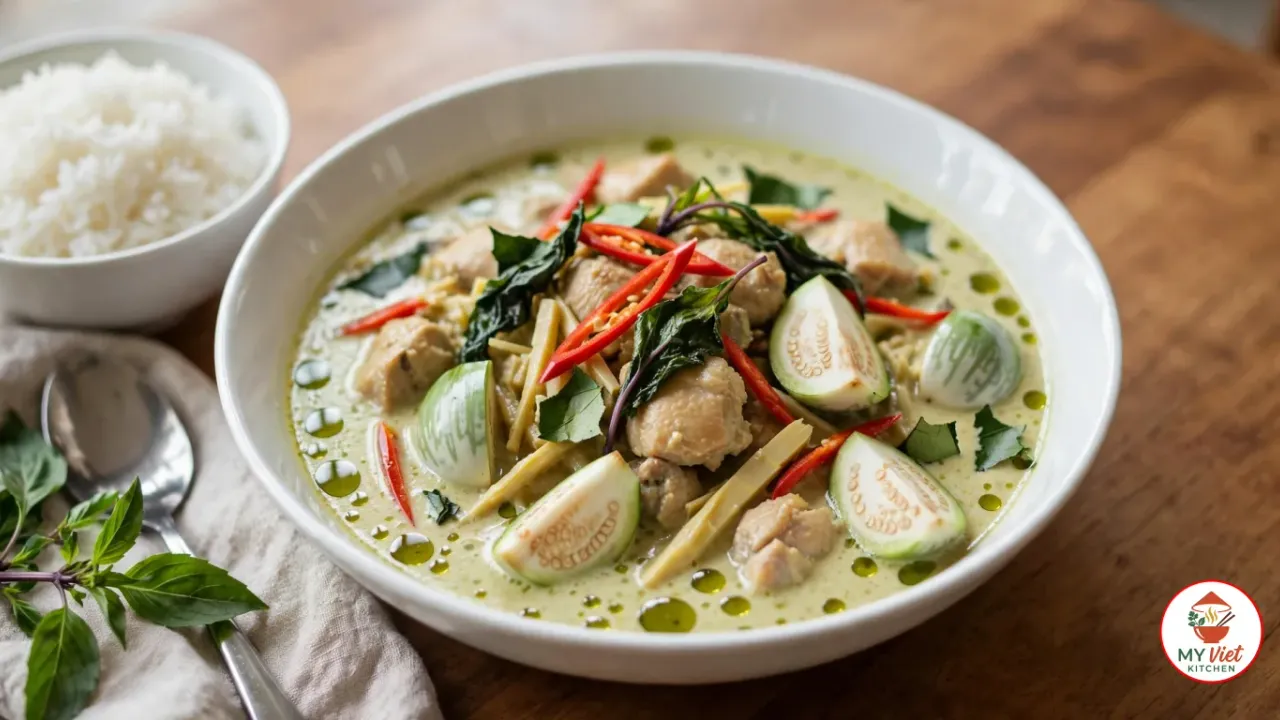
Green curry is a Thai coconut-milk curry coloured by the fresh green chilies in its paste. In Thai it is called gaeng kiew waan, literally “sweet green curry”, though it is not particularly sweet; the “sweet” is thought to describe a soft, pastel shade of green (Hot Thai Kitchen). This recipe starts by frying store-bought paste in cracked coconut cream, simmers chicken thighs with makrut lime leaves, then adds Thai eggplant and a cup of Thai basil.
Prep Time: 20 minutes | Cook Time: 30 minutes | Total Time: 50 minutes | Servings: 4
Difficulty: Easy | Calories: ~410 per serving

Which Green Curry Paste Should You Buy?
There is nothing wrong with a good store-bought paste, says Pailin Chongchitnant of Hot Thai Kitchen, and most Thai people buy theirs premade too (Hot Thai Kitchen). The brand is what matters. She recommends Maeploy first and Aroy-D second. Thai Kitchen brand, she warns, is very weak: if you must use it, use twice as much (Hot Thai Kitchen).
This recipe takes 3 1/2 tablespoons for 4 servings, the amount in her recipe card. Strength varies hugely between brands, so with a brand you haven’t used before, taste the sauce a couple of minutes after the chicken and seasonings go in. Weak? Don’t scoop in raw paste. Fry the extra in a little neutral oil for a few minutes, loosen it with coconut milk or water until pourable, and stir it into the pot (Hot Thai Kitchen).
The optional teaspoon of shrimp paste is her first fix for a bought paste. Thai fermented shrimp paste, gapi, is always added to traditional curry pastes, but most commercial ones leave it out to suit vegetarians. Even when the label lists it, she adds more, because brands don’t use much. Vegetarians can swap in miso (Hot Thai Kitchen). Mash the two pastes together with the back of a spoon before frying.
Want to make the paste yourself? Hers starts with toasted coriander and cumin seeds and white peppercorns, ground fine. Spicy green chilies (Thai or serrano) and milder ones such as jalapeños go into a large stone mortar with coarse salt. Then come Thai basil, the bottom half of fresh lemongrass, galangal, makrut lime zest, cilantro roots or stems, shallots, garlic and shrimp paste (Hot Thai Kitchen). Her green curry recipe can take the whole batch (Hot Thai Kitchen).
Why Fry the Paste in Coconut Cream?
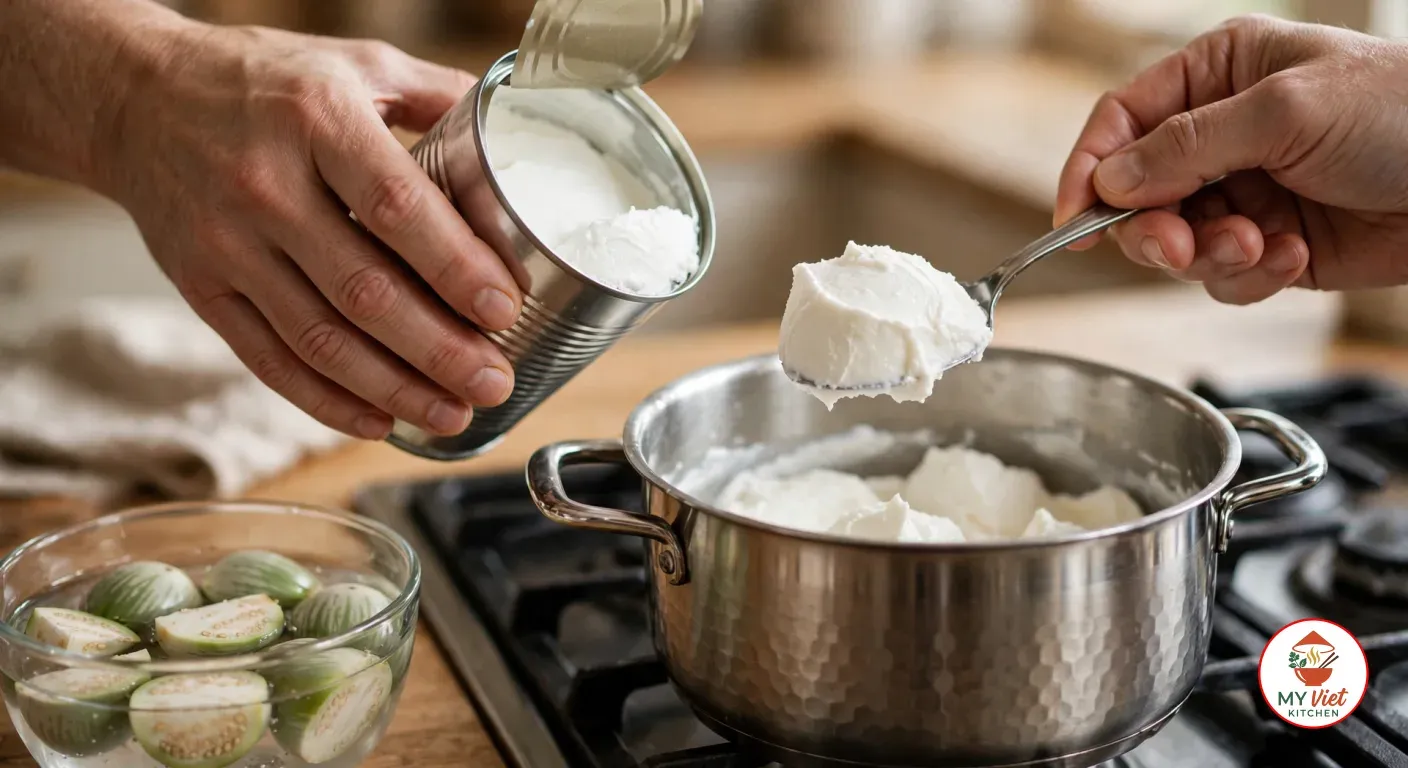
Traditional Thai curry recipes fry the paste in coconut cream that has been “cracked”, simmered until its oil separates. Simmering also drives off water, so the curry comes out slightly more concentrated (Cook’s Illustrated). Frying is also what brings a paste’s flavours together. Messy Vegan Cook notes that a paste pounded at home and simmered straight in coconut milk can taste of raw garlic, though the writer finds this matters less with packaged pastes (Messy Vegan Cook).
That site describes three ways Thai cooks start a curry. One, more common in the North, boils the paste in water or stock. The other two fry it, either in oil or in cracked coconut cream. The cream method is an important step in most of the curries you are likely to order in a restaurant or cook at home, green included (Messy Vegan Cook).
Not every can will crack. Many canned coconut milks are homogenised and contain stabilisers that keep the fat and water together. The same blog has had success with Aroy-D, Chaokoh and Kraw Thip, brands without stabilisers and high in fat (Messy Vegan Cook). Cook’s Illustrated skims about 3/4 cup of solid cream off the top of the can, the amount used here, and found Thai Kitchen coconut milk worked best (Cook’s Illustrated).
If no oil appears, carry on anyway: Pailin’s recipe says that when the paste is very thick and doesn’t separate, you can move on to the next step. She recommends Aroy-D coconut milk in a paper carton and, instead of skimming, brings about 3/4 cup of the milk to a full boil before the paste goes in (Hot Thai Kitchen).
How Do You Cook Thai Eggplant in Green Curry?
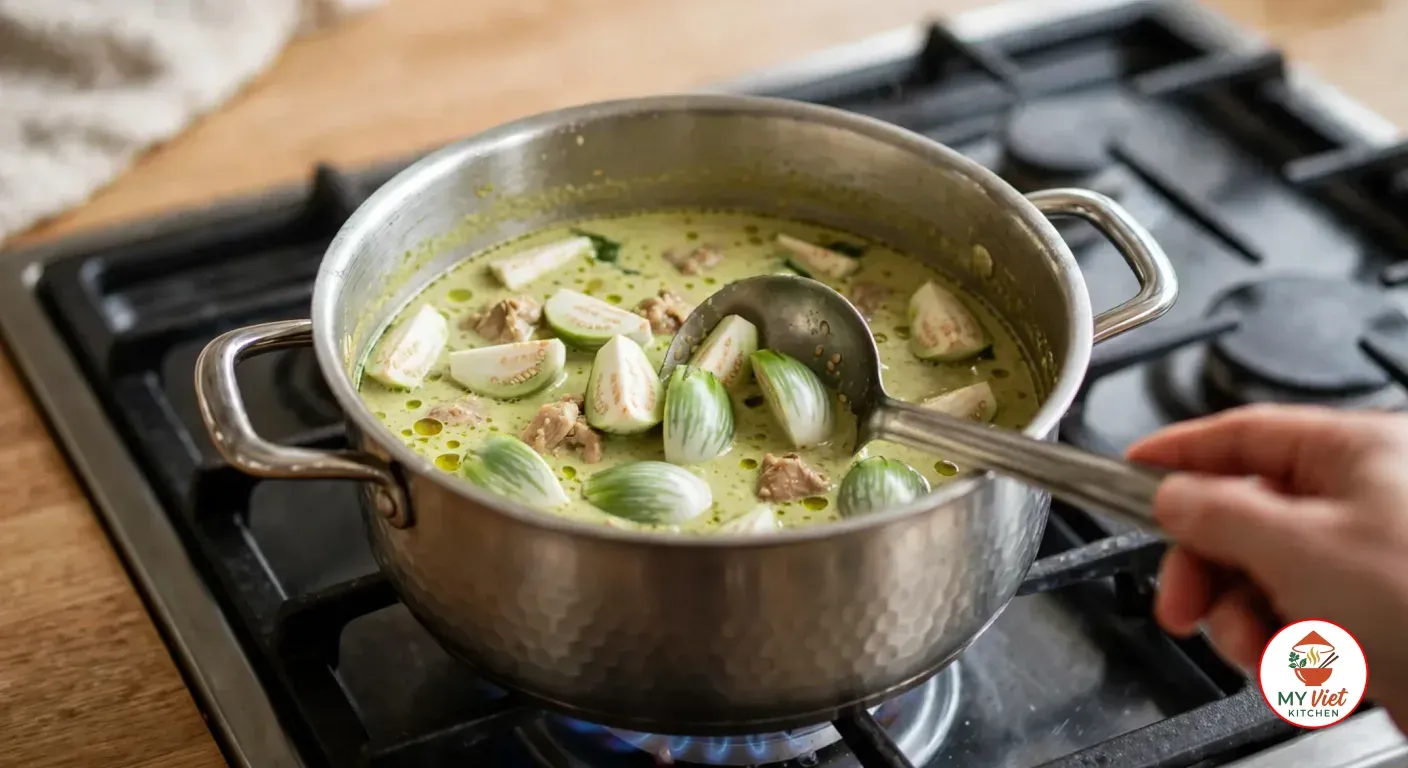
Thai eggplants are round, pale green with white streaks, about the size of a golf ball, with white flesh full of small seeds. Pailin lists them with bamboo shoots and winter melon as the traditional vegetables. Cut each one into bite-size wedges, 6, 8 or even 12 depending on size, and keep them in water until they go in so they don’t turn brown (Hot Thai Kitchen).
In the pot, keep pushing the wedges into the sauce for the first minute, because they brown if left floating. After that, 2 more minutes is enough: stop as soon as a fork meets only slight resistance. Bamboo shoots from a can are already cooked: rinse them and heat them for a minute. Winter melon, peeled and cut into 1-inch cubes, needs 10 minutes, so add it with the lime leaves (Hot Thai Kitchen).
No Thai eggplant at your shop? Use any vegetable that holds up in a soup and adjust the time. The red pepper is only there for colour, so any mild red or orange pepper works (Hot Thai Kitchen).
Ingredients for Green Curry
For the Curry Paste:
- 3 1/2 tablespoons green curry paste (store-bought, such as Maeploy or Aroy-D)
- 1 teaspoon Thai fermented shrimp paste (gapi), optional
For the Curry:
- 1 can (13.5 oz / 400 ml) full-fat coconut milk, unshaken
- 1 lb (450 g) boneless, skinless chicken thighs, cut into 1-inch (2.5 cm) pieces
- 1 cup (240 ml) unsalted chicken stock
- 1 1/2 tablespoons finely chopped palm sugar or light brown sugar
- 1 1/2 to 2 tablespoons fish sauce, divided
- 5 makrut (kaffir) lime leaves
For the Vegetables and Herbs:
- 8 oz (225 g) Thai eggplants (about 6 to 8)
- 1 cup (130 g) canned bamboo shoots, drained and rinsed
- 1/2 red bell pepper, thinly sliced
- 1 long red chili, sliced on an angle (optional)
- 1 cup (20 g) Thai basil leaves
For Serving:
- Steamed jasmine rice
Step-by-Step Instructions
Step 1: Separate the Coconut Cream
1Open the coconut milk without shaking the can. Spoon the thick white cream from the top, about 3/4 cup (180 ml), into a heavy-bottomed pot, and keep the thin milk left in the can for later. Cut each Thai eggplant into 6 to 8 bite-size wedges and drop them straight into a bowl of water so the cut faces don’t brown.
Step 2: Fry the Curry Paste
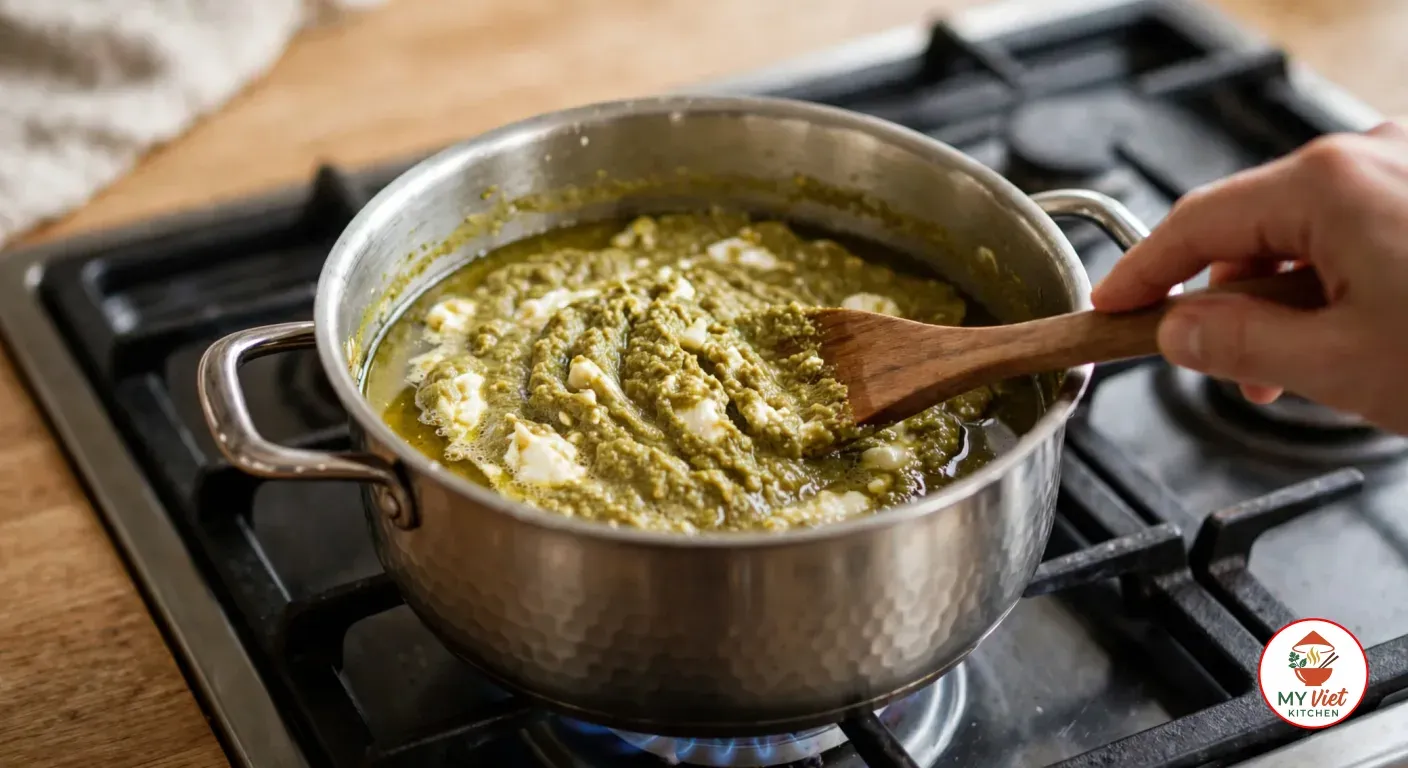
2Bring the cream to a boil over medium heat and let it bubble, stirring, for 3 to 5 minutes. It will thicken and beads of oil will show at the edges. Add both pastes and fry them, stirring often, for 3 to 5 minutes until the oil separates from the paste and pools around it. If no oil appears, move on. If the paste starts sticking to the bottom, loosen it with a splash of the thin coconut milk.
Step 3: Simmer the Chicken
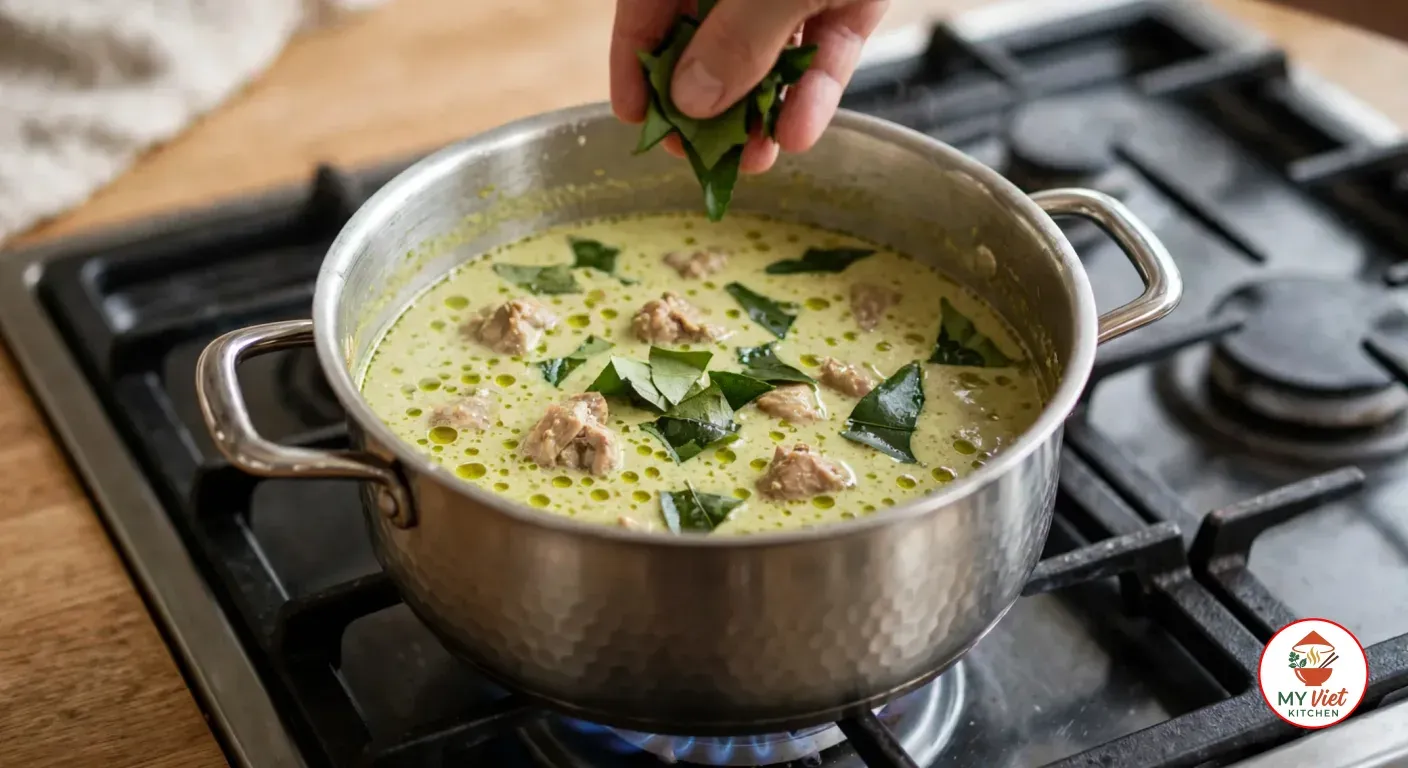
3Stir in the chicken until every piece is coated in paste. Pour in the stock and the rest of the coconut milk, then add the palm sugar and 1 tablespoon of the fish sauce. Twist the lime leaves to bruise them, tear them into chunks off their centre stems and drop them in. Leave it bubbling gently until the chicken is tender enough for a fork to pass through, 10 to 15 minutes.
Step 4: Cook the Eggplant
4Drain the eggplant and add it to the pot. For the first minute, keep pushing the wedges under the sauce with your spoon so they don’t brown. Then leave them to cook for 2 minutes more, until a fork goes through with a little resistance. Add the bamboo shoots for the last minute, just to heat through.
Step 5: Finish with Thai Basil
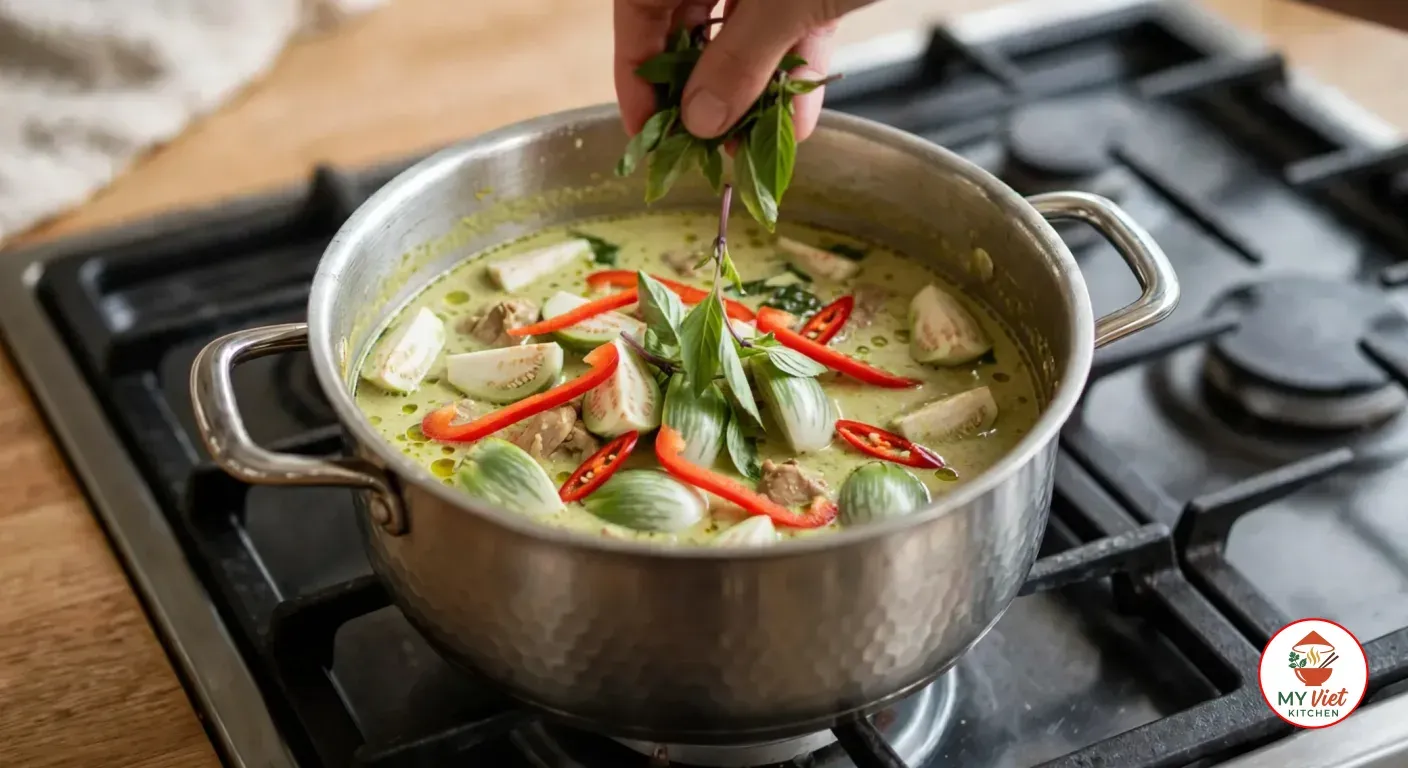
5Turn off the heat. Stir in the red pepper and chili and let them soften in the residual heat, then stir in the Thai basil until it wilts. Taste and add more fish sauce as needed. Serve with jasmine rice.
Frequently Asked Questions
Why is my green curry pale?
Most store-bought pastes go easy on green chilies. Pailin Chongchitnant says brands add very little so the product isn’t overly spicy, which leaves a rather pale curry. She pounds about 15 finely cut Thai basil leaves into the paste for colour, and says any dark green leaves will do. For more heat, add green chilies such as serranos or jalapeños too (Hot Thai Kitchen).
Can you use chicken breast instead of thigh?
Yes, but it goes in near the end. Cut the breast into 1/2-inch slices and marinate them in 1 tablespoon of fish sauce. Hot Thai Kitchen adds them after the eggplant has cooked for 1 minute, then gives them about 2 minutes, until just done. Pailin still calls thighs the best-tasting choice (Hot Thai Kitchen).
Do you eat the makrut lime leaves?
Not in large pieces. The leaves are there for infusion and are traditionally left in the curry, so Hot Thai Kitchen suggests telling your guests not to eat them. Pailin tears them into chunks and throws the centre stems away (Hot Thai Kitchen).
What do you serve with green curry?
Jasmine rice is the classic. Green curry is also commonly served over kanom jeen, thin round noodles made from rice. Pailin asks for the Vietnamese kind of vermicelli, round sticks, boiled 7 to 10 minutes and then dropped into cold water. In Thailand it is eaten with roti too, and some people even pour it over spaghetti (Hot Thai Kitchen).
Sources
- Authentic & Easy Thai GREEN CURRY Chicken, Pailin Chongchitnant, Hot Thai Kitchen, April 2022 (modified July 2026)
- Authentic Thai Green Curry Paste Recipe, Pailin Chongchitnant, Hot Thai Kitchen, modified November 2025
- How to “Crack” Coconut Cream, Cook’s Illustrated, America’s Test Kitchen
- Art of curry: boiled versus fried, Kip, messyvegancook.com, September 2014
- This Thai GREEN CURRY is My Best One Yet!, Pailin’s Kitchen, YouTube, October 2025